Tree & Shrub Care in the North Shore & Northwest Suburbs
Mature trees and shrubs are the slowest thing on a property to replace, so most of this work is keeping what is already there healthy and in proportion. Timing carries more weight than technique.
The work included
- Trimming and shaping worked to each plant's flowering habit and the right season for that species
- Clearance pruning back off rooflines, gutters, walks and drives
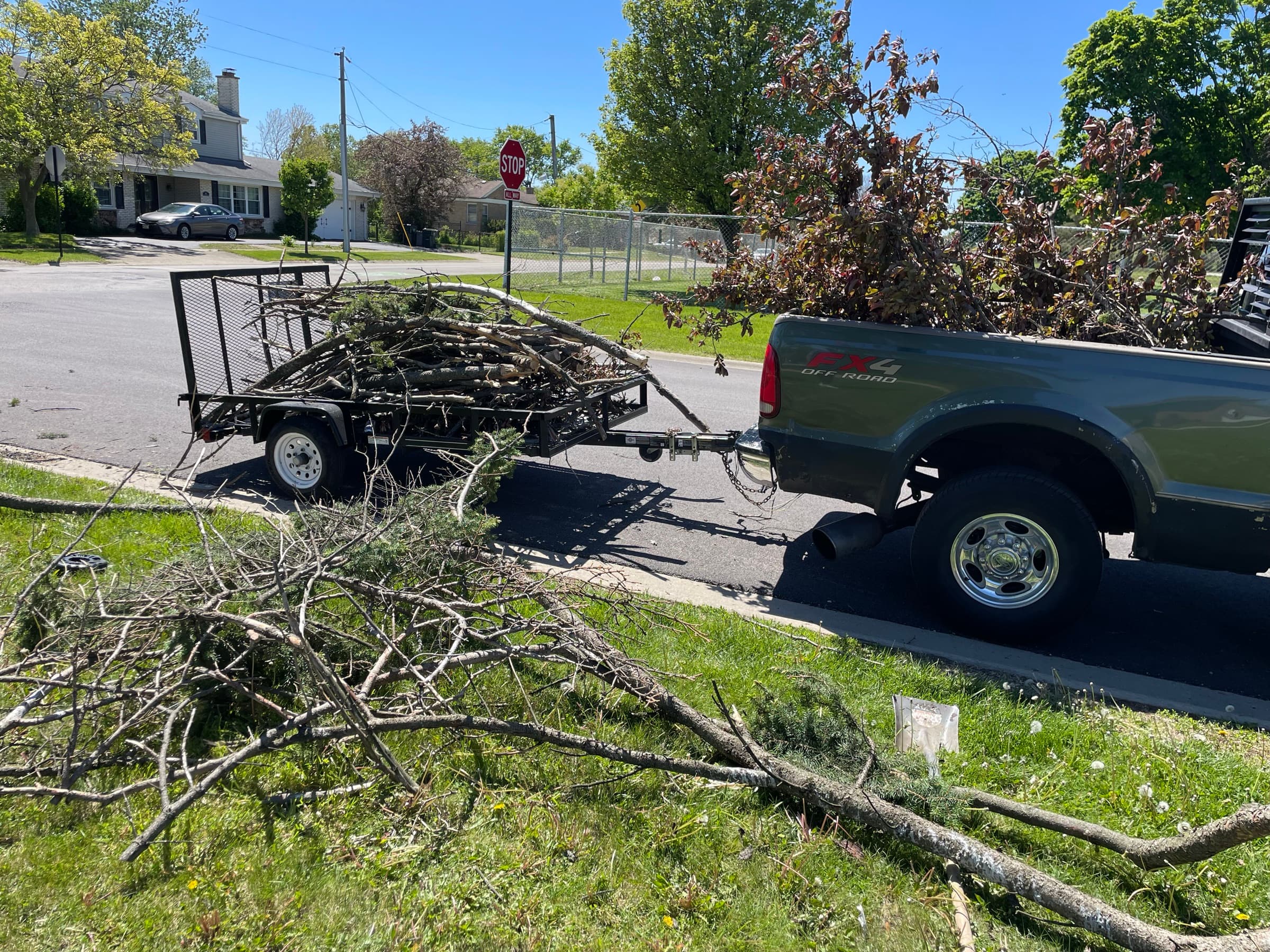
- Deadwood and storm-damage removal
- Bush and shrub removal, including overgrown foundation plantings that have outgrown the house
- Tree removal where a tree is failing, dead or badly placed
- Staged renovation pruning over a season or two for shrubs too far gone to cut back in one go
- Replanting and bed rebuilding after a removal
- Mulch rings at two to three inches, pulled back clear of the trunk and root flare
- Bed cleanup and edging around established planting
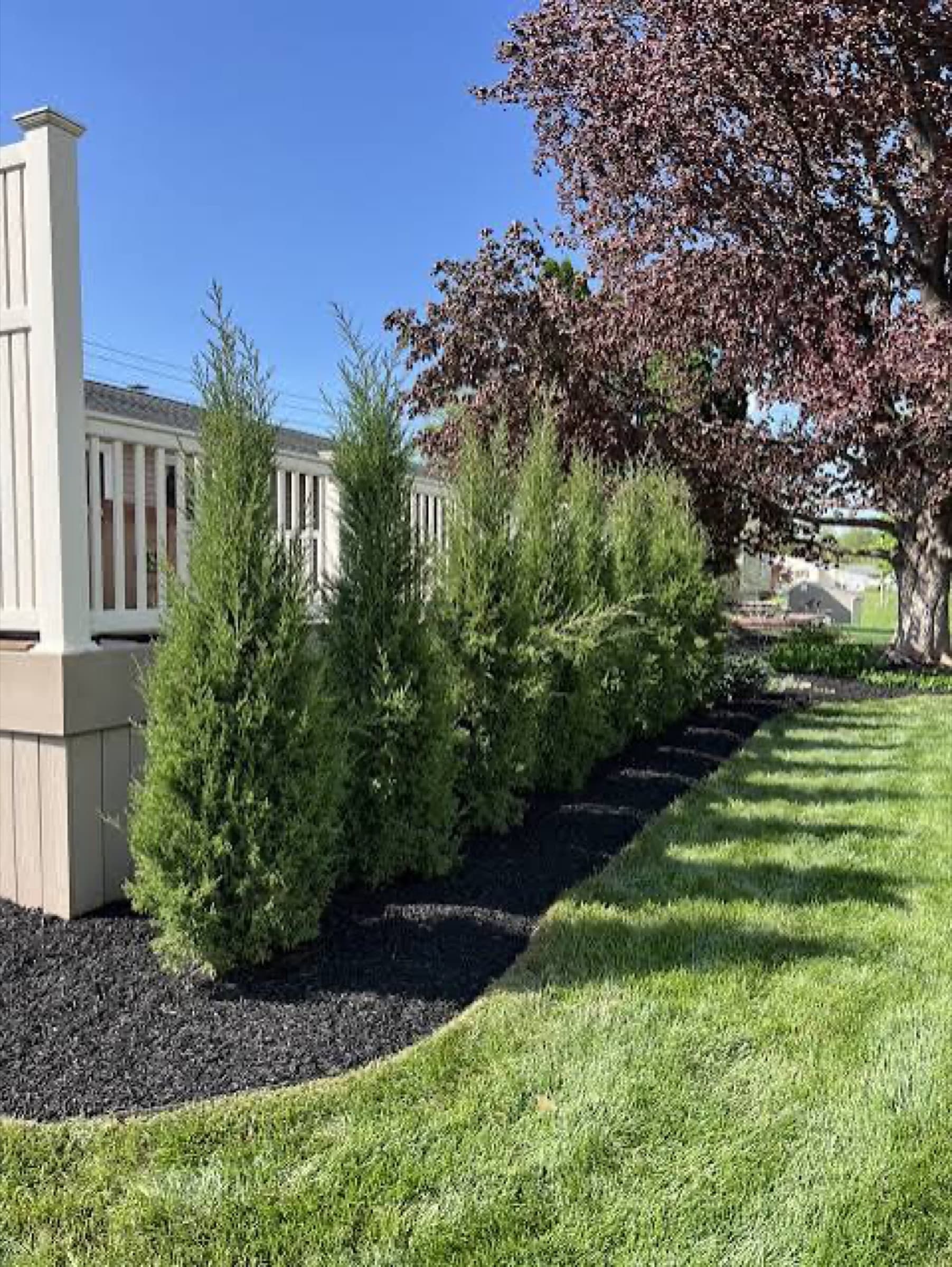
Oaks should not be pruned between April and July. The sap beetles that spread oak wilt are drawn to fresh wounds, the risk peaks in April through June, and a cut that could have waited until dormancy is a real gamble on something that took eighty years to grow.
Spring-flowering shrubs set next season's buds within weeks of finishing, which is why tidying a lilac or a forsythia in late summer removes the flowers before they open.
Ash is its own conversation. Emerald ash borer was found in Cook County in 2006, is now recorded in every county in Illinois, and very few untreated ash in an infested area come through it.
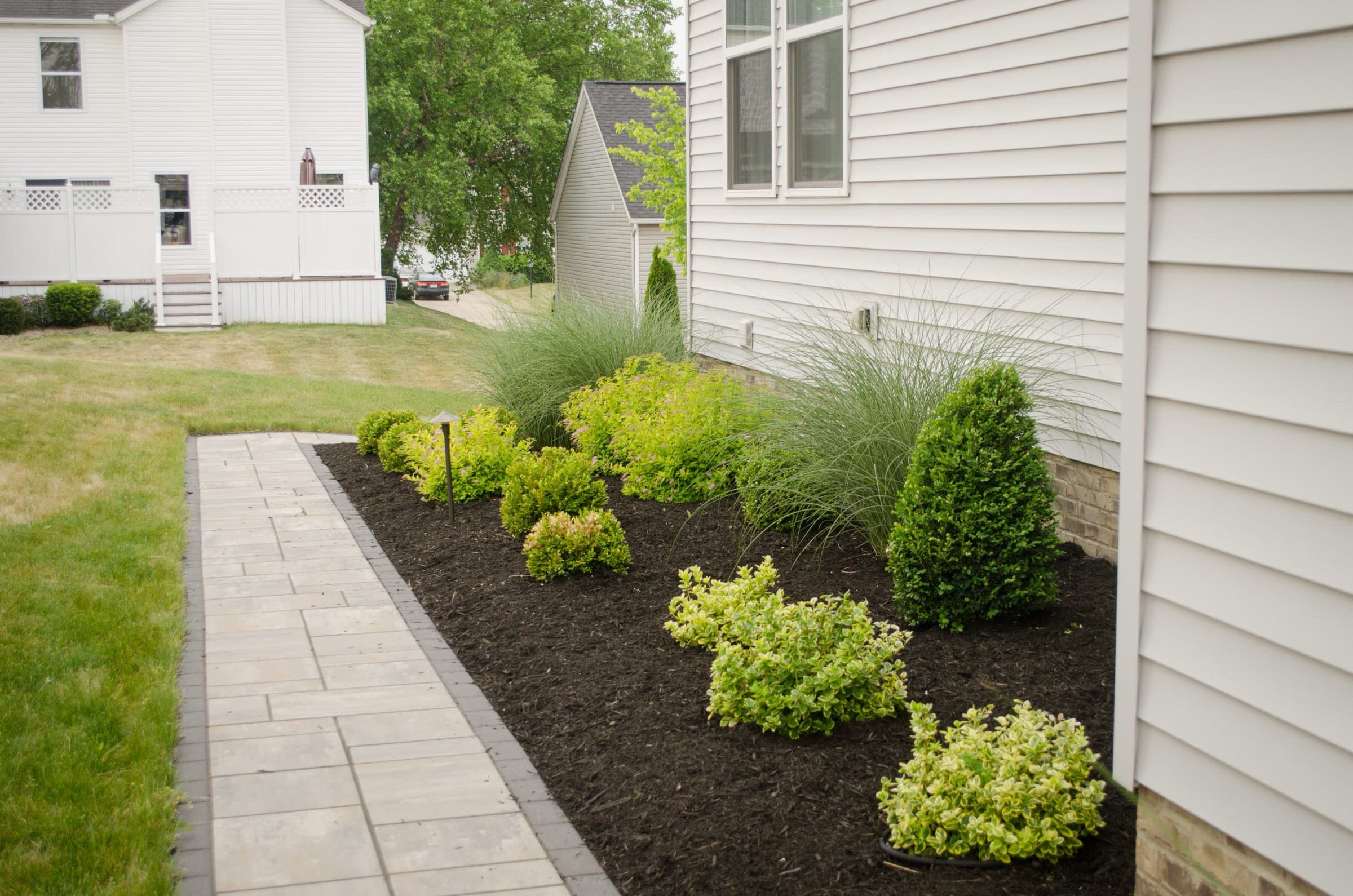
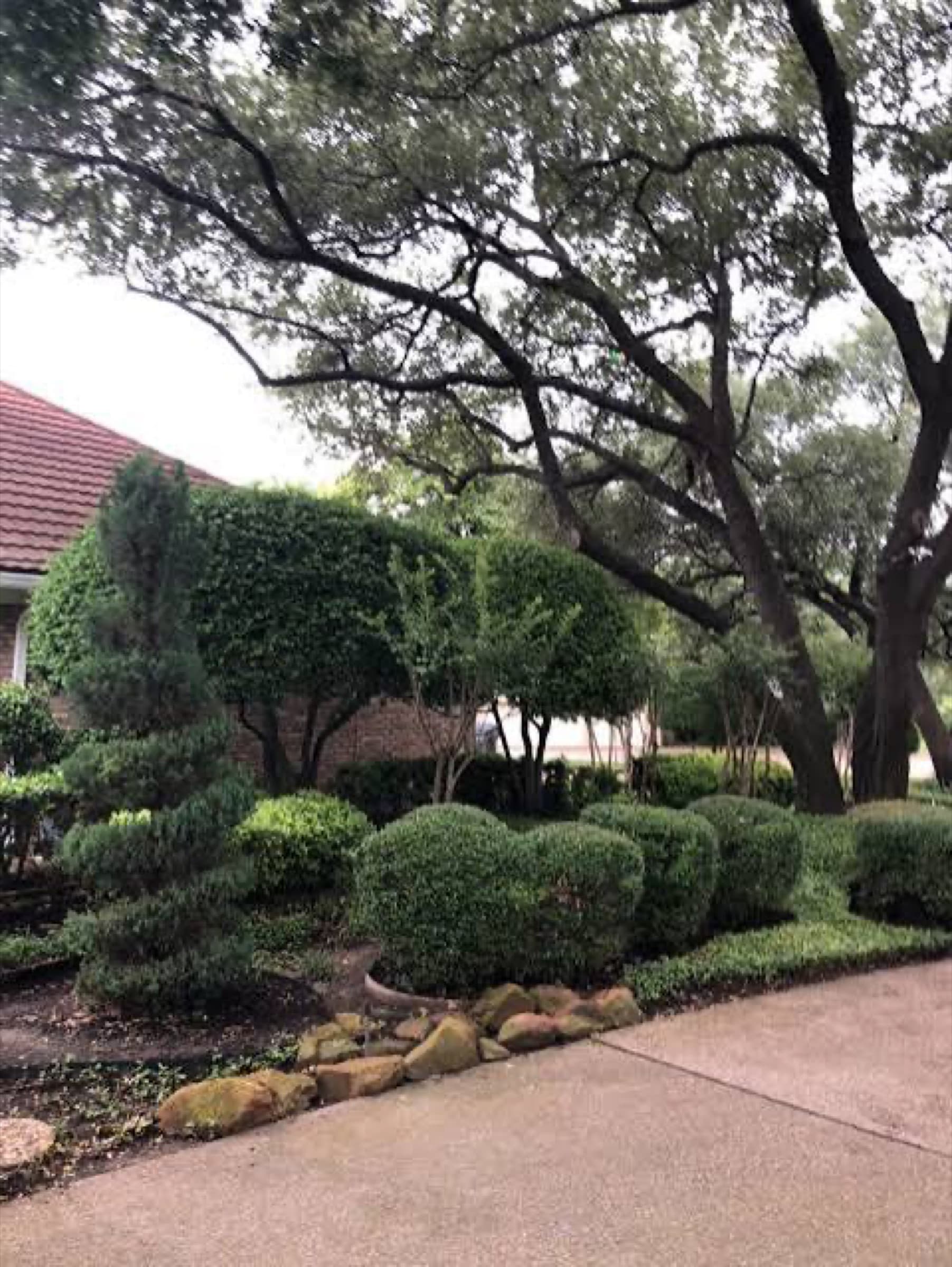
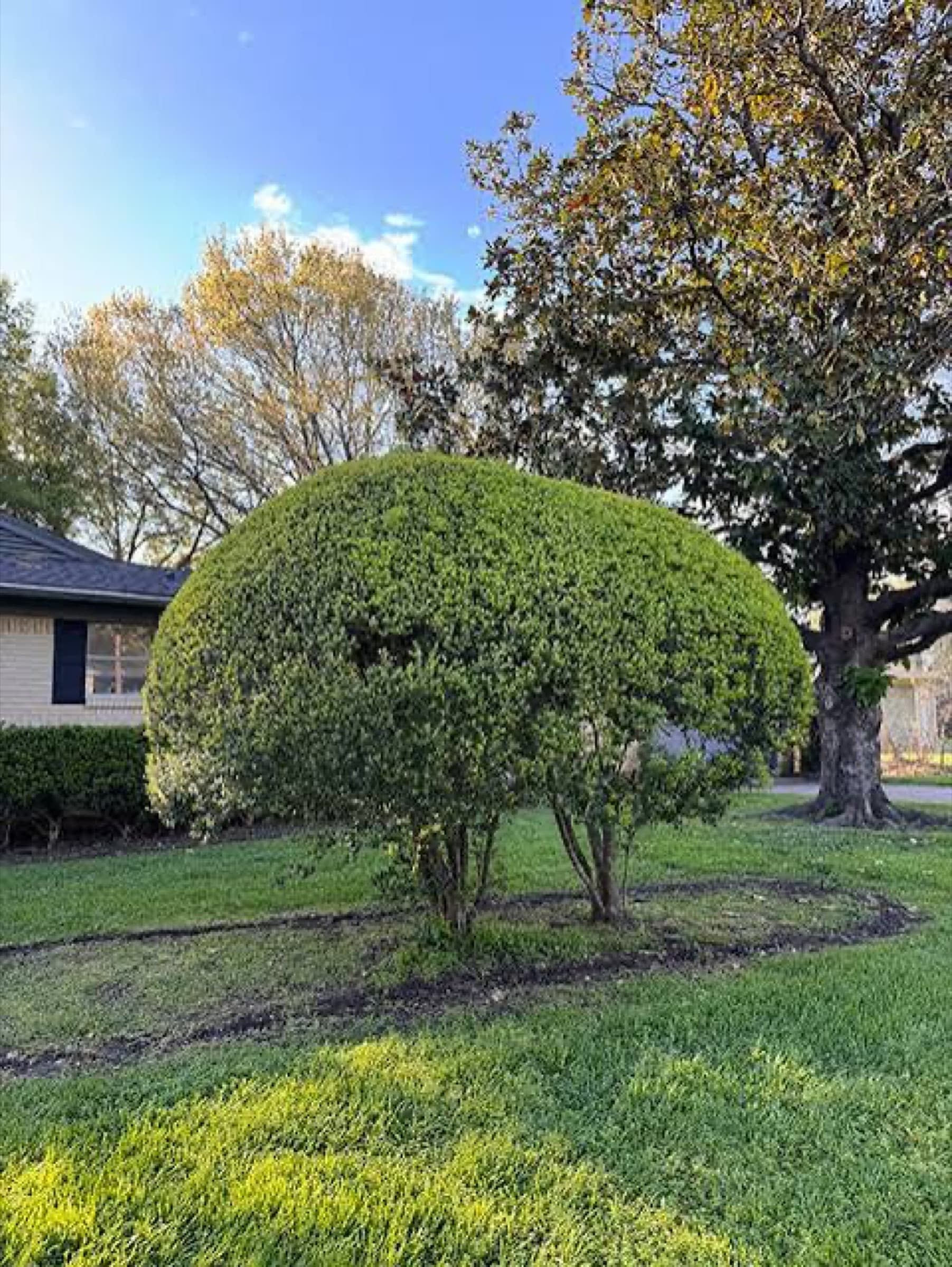
Tree & Shrub Care we have done
Straightforward from the first call
- 01
Get in touch
Call or send the form with what the property needs.
- 02
We walk the property
Seeing it in person is the only way to quote it honestly.
- 03
You get a quote
Scope and price in writing, so there are no surprises later.
- 04
We schedule the work
Booked in, done, and checked before we leave.
Tree & Shrub Care questions
When should shrubs be pruned?
It depends on whether the plant flowers on old wood or new, which is a per-species answer rather than a per-visit one. Lilac and forsythia set next year's buds right after they finish blooming, so they get pruned immediately after flowering and left alone afterwards. Panicle hydrangea flowers on new growth and is cut back in late winter. Bigleaf hydrangea flowers on old wood and is pruned after it blooms. Get that backwards and the plant is perfectly healthy and simply does not flower.
Is there a wrong time to prune a tree?
Yes, and for oaks it is specific: April through July, with the highest risk in April, May and June. Fresh wounds attract the sap-feeding beetles that carry oak wilt, and the disease moves through root grafts between neighbouring oaks once it establishes. Elms carry a comparable risk in the same season. For most shade trees the dormant season is best anyway. The structure is visible without leaves, the ground is firm under equipment, and disease pressure is low. Dead or hazardous limbs are the exception and come out whenever they are found.
What should be done about an ash tree?
Look at it this year rather than next. Emerald ash borer reached northeast Illinois in 2006 and is now recorded statewide, and in an area that has had it a while, untreated ash survive at very low rates. The tells are canopy thinning from the top down, sprouting low on the trunk, bark splits, and the pale flecking left where woodpeckers have worked the bark for larvae. The decision is treatment or removal, and it depends on how much live canopy is left. A dead ash goes brittle fast, which makes removal harder and more dangerous the longer it waits.
Why is my evergreen brown on one side only?
If the brown side faces a road or a salted drive, that is almost certainly deicing salt spray. It shows as browning that starts at the needle tip and works back toward the base, concentrated on the road-facing side. Rock salt also stops dissolving below roughly fifteen degrees, so a cold snap tends to produce heavier applications and more spray. Flushing the soil in spring helps, a burlap screen over winter helps more, and when something has to be replaced, siting the new plant further back from the kerb helps most.
Do you remove stumps?
Stump work is handled case by case, because access and what is going in afterwards both change the approach. A stump in open lawn is straightforward; one between a fence and a foundation is not. If a replacement tree is going nearby, the grinding depth and how much of the spoil comes out matter, since a backfill of wood chips is a poor planting medium. Worth raising during the walkthrough so the quote actually reflects it.
Can an overgrown yard be brought back, or does it need replanting?
More can usually be recovered than people expect, but not in a single afternoon. Cutting everything back hard at once removes the leaf area a plant lives on and can push an old shrub into a decline it does not come out of. Staged renovation pruning over two or three seasons, taking the oldest stems out and letting new growth come up to replace them, recovers a surprising amount. What is genuinely finished, and what is just neglected, is clear once someone has looked at it.
Tree & Shrub Care across the North Shore & Northwest Suburbs
Across the North Shore, the northwest suburbs and the surrounding area.
- Evanston
- Wilmette
- Winnetka
- Glencoe
- Northbrook
- Glenview
- Highland Park
- Deerfield
- Lake Forest
- Arlington Heights
- Schaumburg
- Palatine
- Rolling Meadows
- Mount Prospect
- Prospect Heights
- Buffalo Grove
- Elk Grove Village
- Des Plaines
- Hoffman Estates
- Inverness
- Barrington
- Libertyville
- Vernon Hills
- Mundelein
- Lake Zurich
- Grayslake
- Crystal Lake
Need tree & shrub care?
Free estimates across Arlington Heights, Evanston and across the North Shore and northwest suburbs and the surrounding suburbs. Tell us what you are looking at and we will come and see it.