Landscape Design in the North Shore & Northwest Suburbs
Design starts with how a yard actually gets used: where people sit in the evening, where the kids cut the corner off the grass, where water runs after a storm. Then the site has its say, and it has more of a say than taste does.
The work included
- A measured layout of the property, beds, paths, sight lines and where the usable space honestly is
- Planting plans worked to mature size and spacing rather than planting-day size
- Plant selection for the site's exposure, drainage and salt exposure, hardy to the 5b/6a line
- Four-season structure, evergreen mass, bark and seedheads, so the February view is not bare mulch
- Landscape enhancement and replanting for beds and borders already in place
- Bed construction, edging and decorative stone
- Grading and soil preparation before anything goes in the ground
- Staging and sequencing so hardscaping, drainage and irrigation happen in the right order
- Coordination with the paving, wall and irrigation work handled by the same crew
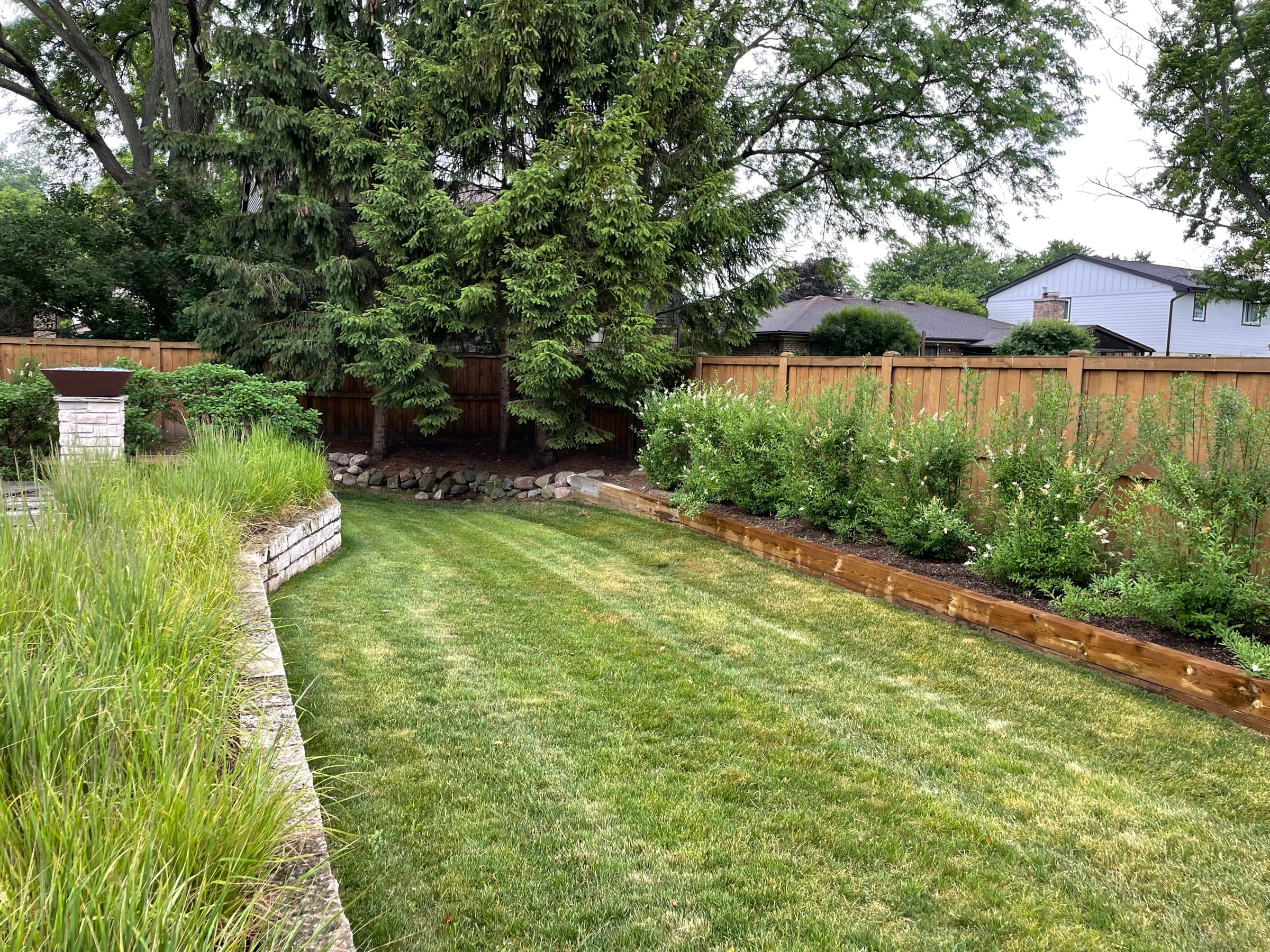
Arlington Heights sits on the 5b/6a line on the 2023 hardiness map, which decides what reliably comes back after a bad February. The clay underneath decides what will drain and what will drown. The direction a bed faces decides what burns out by August.
A plan worth paying for answers all three, and it sizes plants for what they become rather than what fits on the trailer. The most common fault in a new landscape is not the plant list but the spacing, and it does not show up until the third summer, when everything is touching and half of it has to come out.
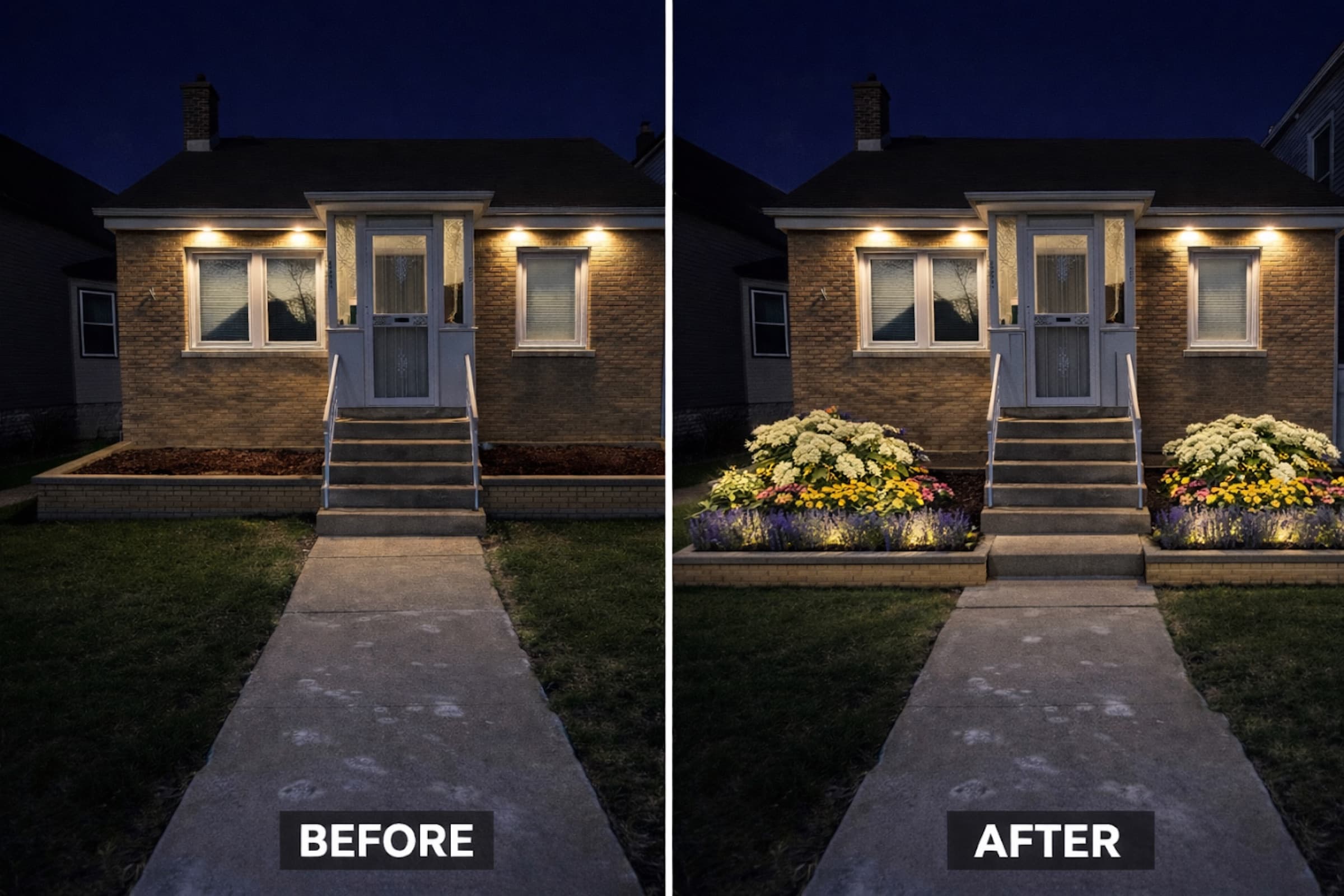
Landscape Design we have done
Straightforward from the first call
- 01
Get in touch
Call or send the form with what the property needs.
- 02
We walk the property
Seeing it in person is the only way to quote it honestly.
- 03
You get a quote
Scope and price in writing, so there are no surprises later.
- 04
We schedule the work
Booked in, done, and checked before we leave.
Landscape Design questions
Can you work on one area rather than the whole yard?
Yes, and most projects start that way. A bare front bed, a slope that will not hold, a corner where nothing has grown in five years, a stretch of lawn that is really a path everyone walks anyway. Fixing one area properly and extending later is often better than a whole-property plan executed thinly, and it lets you see how a bed actually performs through a season before committing to the same approach everywhere else.
How do you choose plants?
By site first and appearance second, because a plant suited to the conditions needs a fraction of the intervention. The questions are: how much sun does this spot get and at what time of day, how long does it stay wet after rain, is it in the splash zone of a salted drive or walk, and how much upkeep do you actually want to take on. Hardiness sets the outer limit, Arlington Heights falls on the 5b/6a line, but exposure and drainage are what kill plants here, not winter lows.
Does design work include the construction?
It can, and the sequencing is the reason that matters. Grading and hardscaping come before planting because both involve equipment and spoil. Drainage and irrigation lines go in before sod and beds, not through them. Trees are set before the smaller planting that has to work around them. When the same crew holds the whole job, that order is just how the work runs instead of three contractors each arriving to find the previous one in the way.
When is the best time to plant?
Spring and early fall are both good, and fall is underrated for trees and shrubs, soil is still warm, so roots establish while the plant is not also trying to push top growth, and autumn rainfall does some of the watering. The caveat is that anything planted in fall has to be watered until the ground actually freezes, which here means into November most years. Broadleaf evergreens are the exception worth being careful with, since they keep losing moisture through the winter.
Why do new plantings fail in their second year rather than their first?
Because in year one the nursery root ball is still carrying the plant. In year two it has to live on whatever rooted out into the native soil, and on clay that is where things go wrong. A hole dug with smooth glazed sides acts like a container, roots circle instead of leaving, and water collects in the bottom with nowhere to go. Planting depth matters just as much: a root flare buried a few inches too deep is a slow decline that takes three or four years to become obvious.
How much maintenance will a new landscape need?
That is decided at the design stage, not afterwards. A bed of mixed perennials is handsome and wants real attention several times a season. A massed shrub planting with a clean edge and proper mulch depth wants a fraction of it. Neither is the right answer in general. The right answer depends on how much time you want to spend out there, and it is a much better conversation to have before the plants are in the ground than after.
Landscape Design across the North Shore & Northwest Suburbs
Across the North Shore, the northwest suburbs and the surrounding area.
- Evanston
- Wilmette
- Winnetka
- Glencoe
- Northbrook
- Glenview
- Highland Park
- Deerfield
- Lake Forest
- Arlington Heights
- Schaumburg
- Palatine
- Rolling Meadows
- Mount Prospect
- Prospect Heights
- Buffalo Grove
- Elk Grove Village
- Des Plaines
- Hoffman Estates
- Inverness
- Barrington
- Libertyville
- Vernon Hills
- Mundelein
- Lake Zurich
- Grayslake
- Crystal Lake
Need landscape design?
Free estimates across Arlington Heights, Evanston and across the North Shore and northwest suburbs and the surrounding suburbs. Tell us what you are looking at and we will come and see it.