Irrigation & Drainage in the North Shore & Northwest Suburbs
Two related problems: getting water where it is wanted, and getting it away from where it does damage. On clay soil they are closer to one problem than two.
The work included
- Spring startup: system charged, every zone walked, heads checked for arc, reach and blocked spray
- Head adjustment and replacement, including the heads quietly watering the drive instead of the lawn
- Coverage checks and run-time adjustment so each zone applies what that zone's turf actually needs
- Leak, valve and wiring repair, and tracing a zone that will not come on
- Winterization before the first hard freeze, lines blown out and the backflow device drained
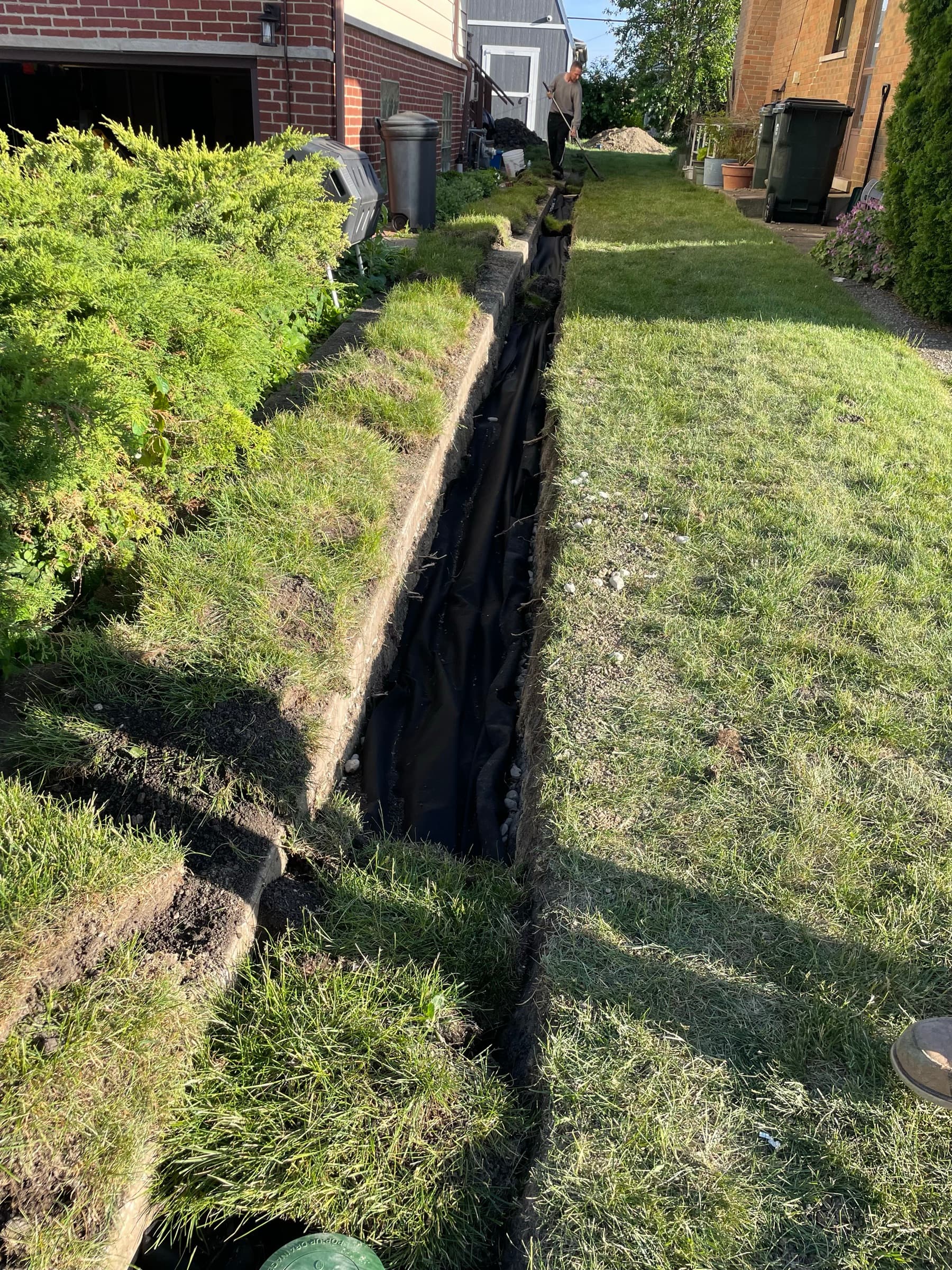
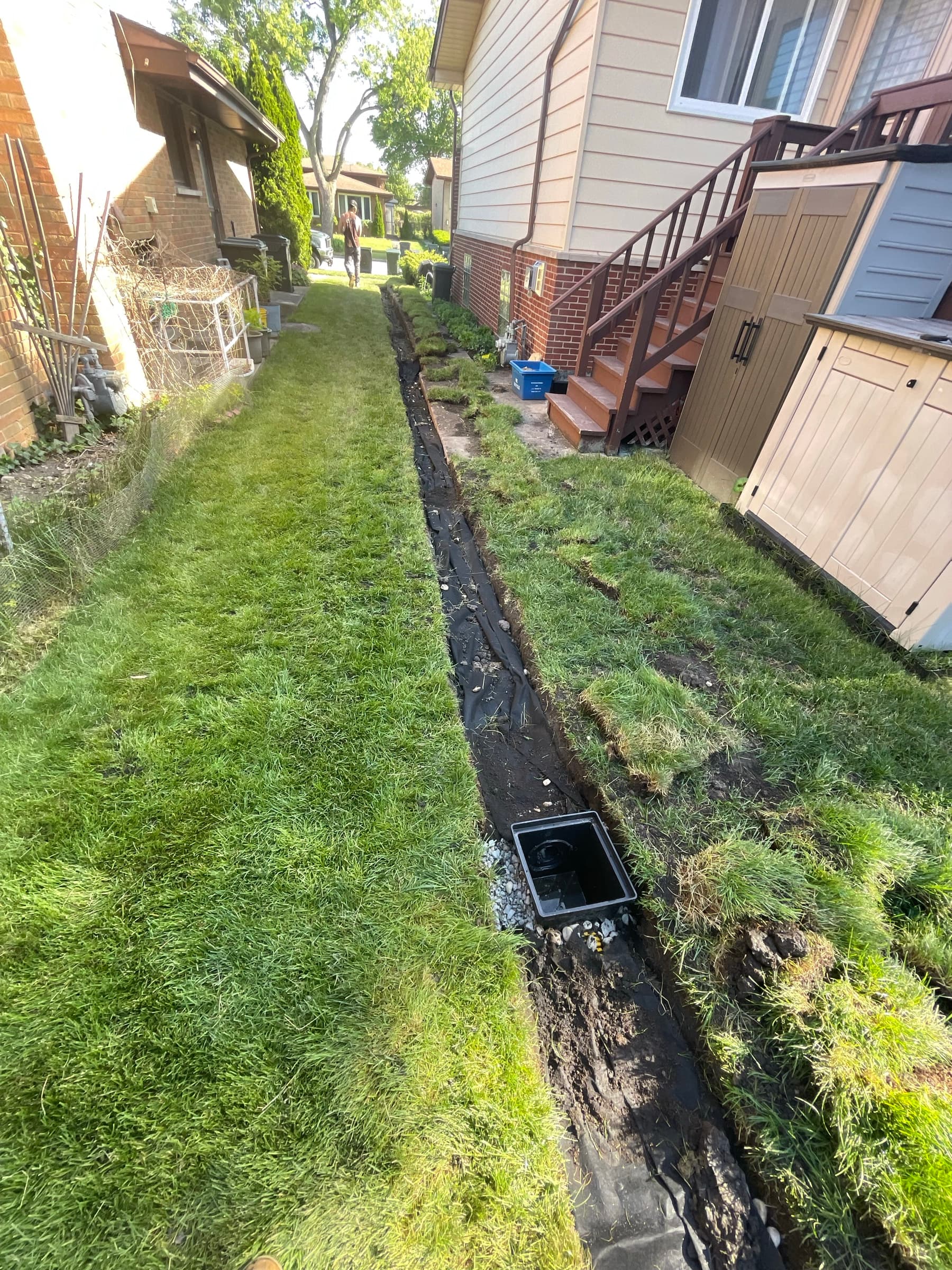
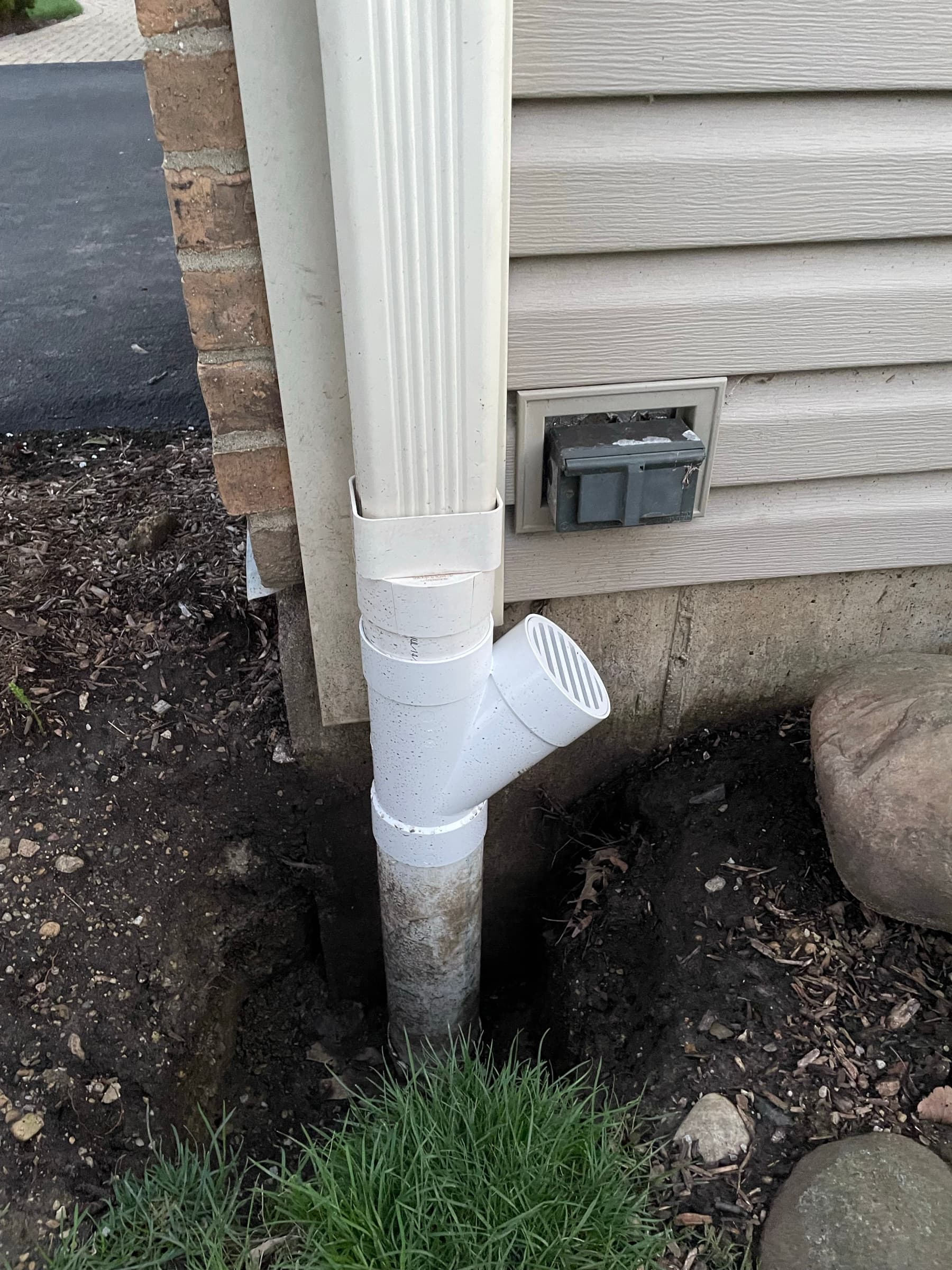
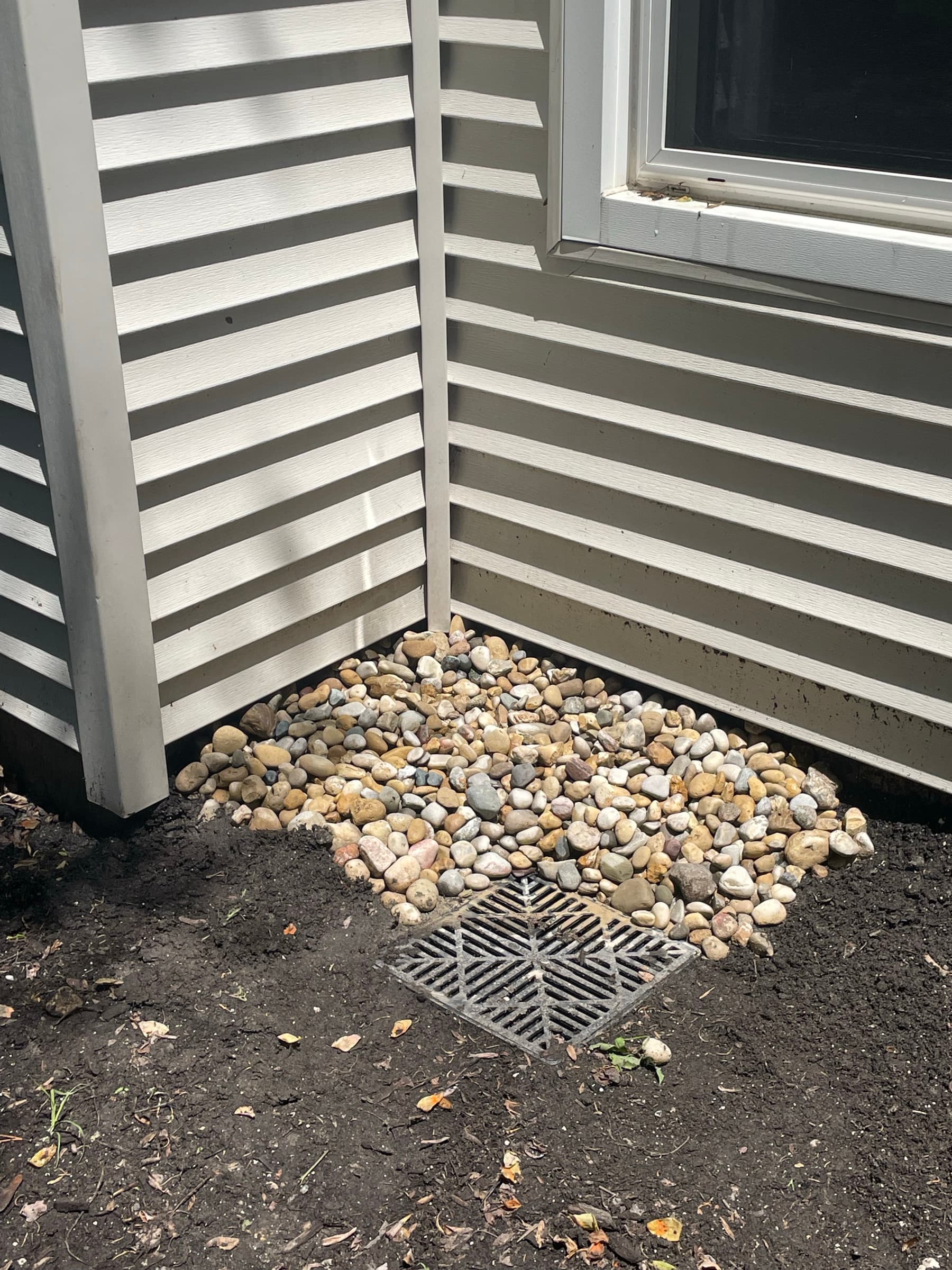
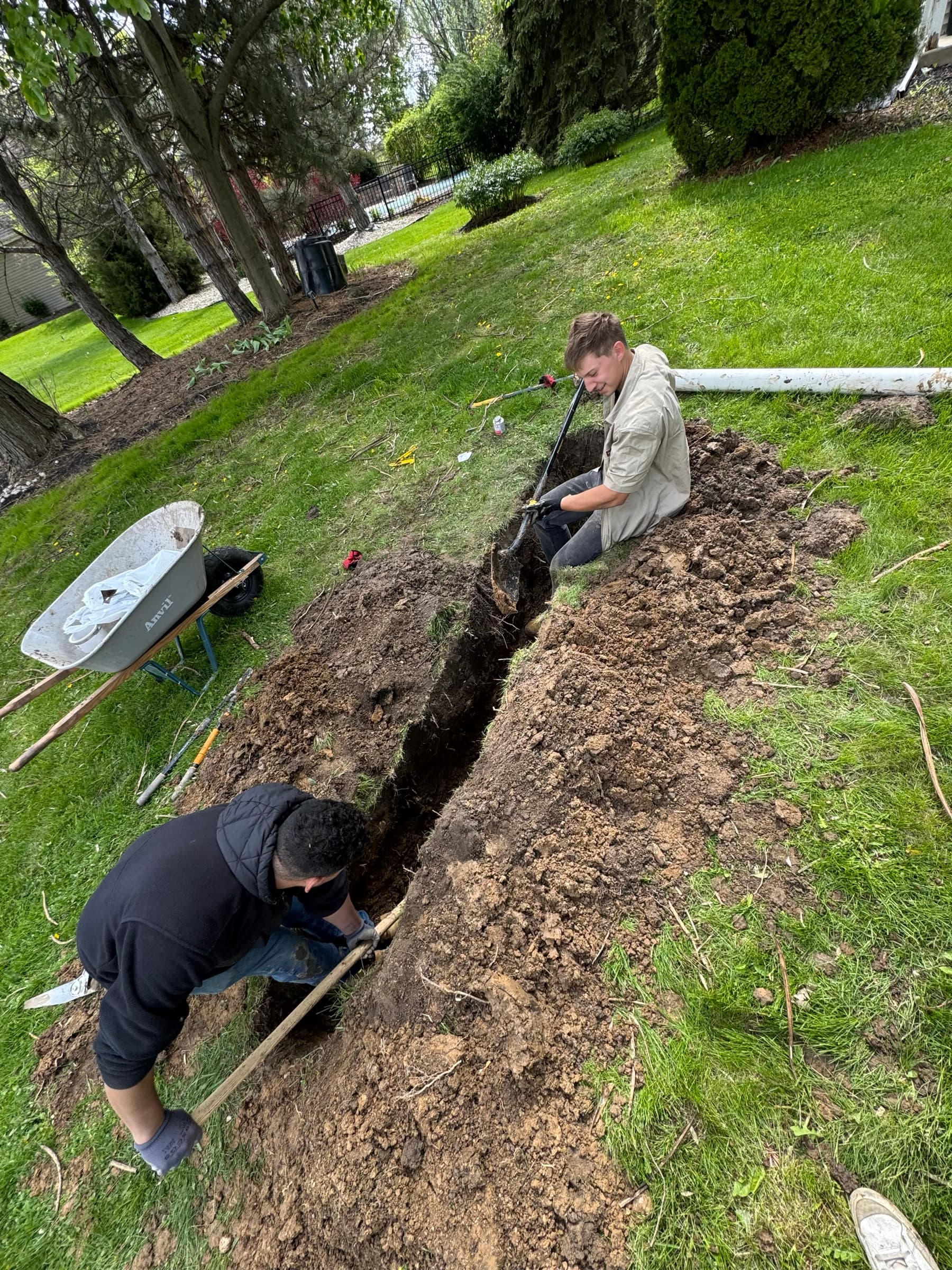
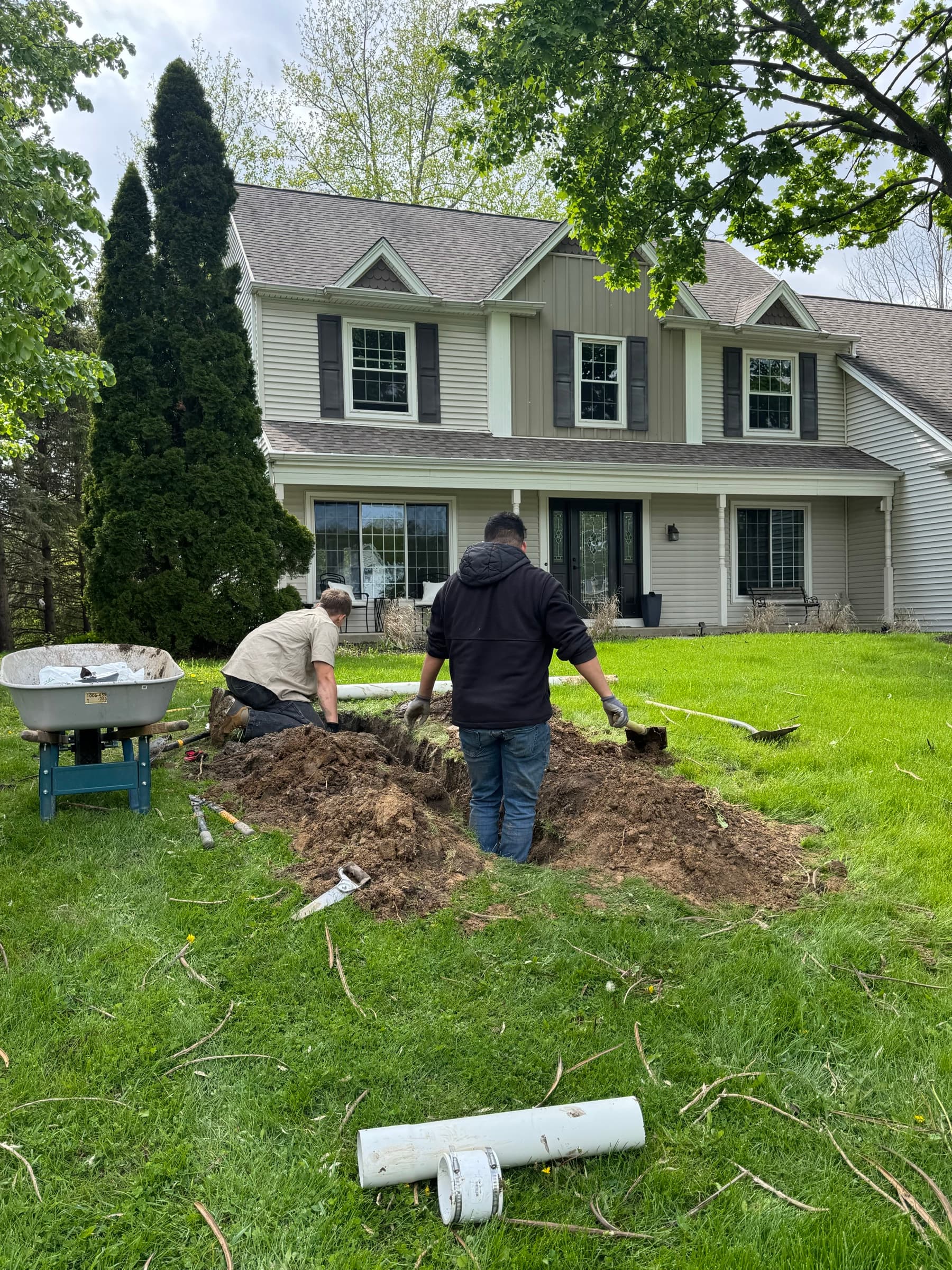
- Trenching for drainage lines and downspout extensions, run out past where water collects
- Regrading to restore fall away from foundations, stoops and patios
- Swales and surface drainage for yards where a buried pipe alone will not solve it
- Topsoil delivery and fine grading to take out the low spots that hold water
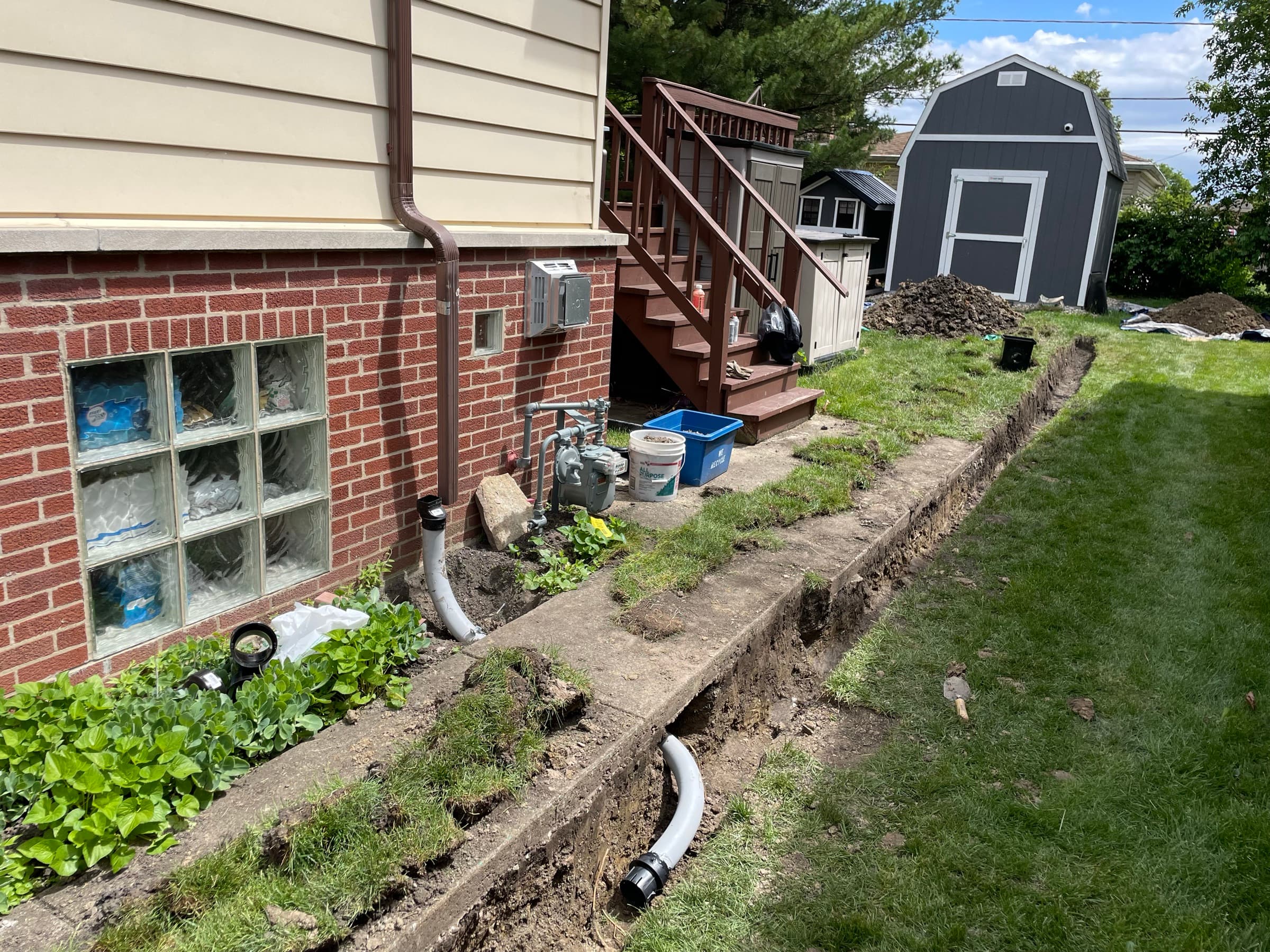
The soil accepts water slowly, so a sprinkler run long enough to wet the root zone tends to puddle and run off at the surface. Meanwhile a yard that already sheds badly ends up holding everything four downspouts hand it.
Code asks for six inches of fall in the first ten feet away from a foundation wall, and a striking number of established properties no longer have it. Grade settles, mulch is topped up year after year, and patios get added.
A lawn wants roughly an inch to an inch and a half of water a week, delivered deep and infrequently, early in the morning. A system that cannot manage that is usually not broken. It is badly adjusted.
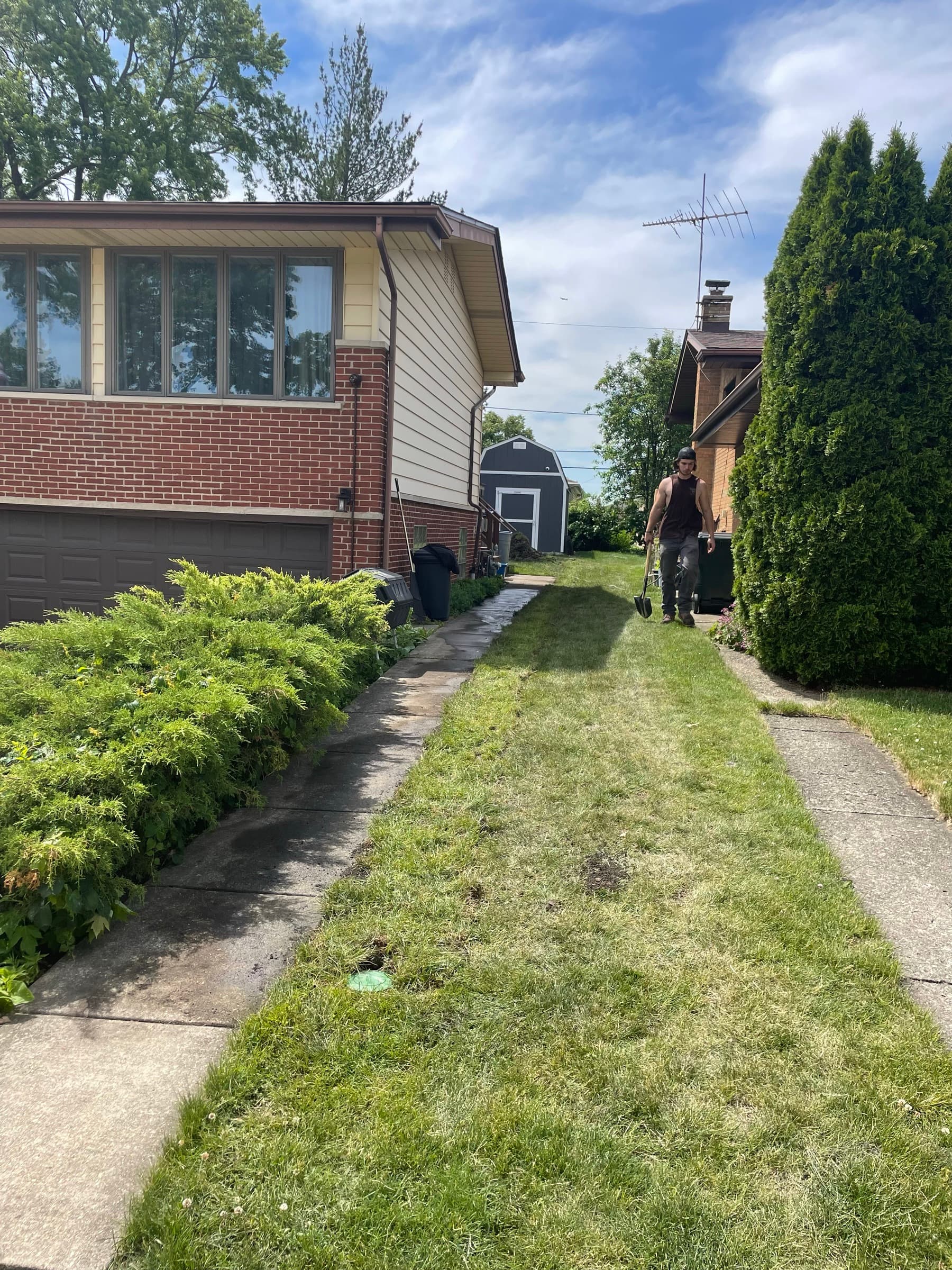
Irrigation & Drainage we have done
Straightforward from the first call
- 01
Get in touch
Call or send the form with what the property needs.
- 02
We walk the property
Seeing it in person is the only way to quote it honestly.
- 03
You get a quote
Scope and price in writing, so there are no surprises later.
- 04
We schedule the work
Booked in, done, and checked before we leave.
Irrigation & Drainage questions
When should a sprinkler system be winterized?
Before the first hard freeze, which means booking it in September or early October rather than reacting to a forecast. The normal first freeze at O'Hare is around the nineteenth of October, and the inland suburbs usually get there before the lakefront does. Water left in a line expands when it freezes and splits pipe, fittings and. Most expensively. The backflow device, which turns a routine seasonal service into a spring repair. Blowing the lines out and draining the backflow is the whole job.
Why does part of the lawn stay wet after rain?
Three usual causes, and more topsoil on the surface is not the fix for any of them. Grade: water follows the ground, and a low spot collects whatever the surrounding area sheds. Compaction: a clay subgrade that was driven over during construction accepts almost no water. Volume: one roof plane and one downspout can deliver far more water to a corner than that corner can absorb. Working out which it is means looking at where the water comes from, not only where it sits.
Can drainage be fixed without digging up the whole yard?
Usually, because the work follows the water rather than a standard layout. Sometimes the answer really is a downspout extension and ten feet of pipe getting the roof water past a flowerbed. Sometimes it is a short trench to a lower point and a regrade of one corner. Occasionally it is substantial. What decides it is a walk of the property, ideally while it is actually wet, which is the one time the problem shows you exactly where it is.
How long should each zone run?
There is no universal number, because heads differ in output and zones differ in exposure. The way to find it is to put a few straight-sided containers out in a zone and time how long it takes to collect a set depth. That converts a guess into a measurement. The target is an inch to an inch and a half a week across everything, rainfall included. On clay, splitting a zone into two or three shorter cycles with a soak gap between them delivers far more of that water into the soil than one long run.
Should the system run during a wet week?
No, and running it anyway does real damage. Constantly wet soil keeps roots shallow because they never have to go looking for moisture, and it keeps the canopy damp long enough for fungal disease to take hold. Clay compounds it, since the water has nowhere to go. A rain sensor handles this automatically; so does the discipline of actually turning the controller off. The point of a system is matching water to need, not applying a fixed amount regardless.
Is a French drain the answer?
Only when there is somewhere lower to take the water. A gravel trench with no outfall is a buried bathtub: it fills, then stays full, and the wet spot comes back. On clay there is a second consideration. The trench has to be properly bedded and wrapped, or the fine clay particles migrate into the stone and blind the fabric within a few seasons, at which point the drain is just a trench full of mud. Where it does fit, it is excellent. It is just not the default.
Irrigation & Drainage across the North Shore & Northwest Suburbs
Across the North Shore, the northwest suburbs and the surrounding area.
- Evanston
- Wilmette
- Winnetka
- Glencoe
- Northbrook
- Glenview
- Highland Park
- Deerfield
- Lake Forest
- Arlington Heights
- Schaumburg
- Palatine
- Rolling Meadows
- Mount Prospect
- Prospect Heights
- Buffalo Grove
- Elk Grove Village
- Des Plaines
- Hoffman Estates
- Inverness
- Barrington
- Libertyville
- Vernon Hills
- Mundelein
- Lake Zurich
- Grayslake
- Crystal Lake
One crew handles the rest too
Need irrigation & drainage?
Free estimates across Arlington Heights, Evanston and across the North Shore and northwest suburbs and the surrounding suburbs. Tell us what you are looking at and we will come and see it.