Project work
Brick Paving in the North Shore & Northwest Suburbs
A paver patio is only as good as the base underneath it, and nearly every failed patio in this area failed in the same place. Get the base right and it stays flat. Skip a step and two winters will find it.
What it covers
The work included
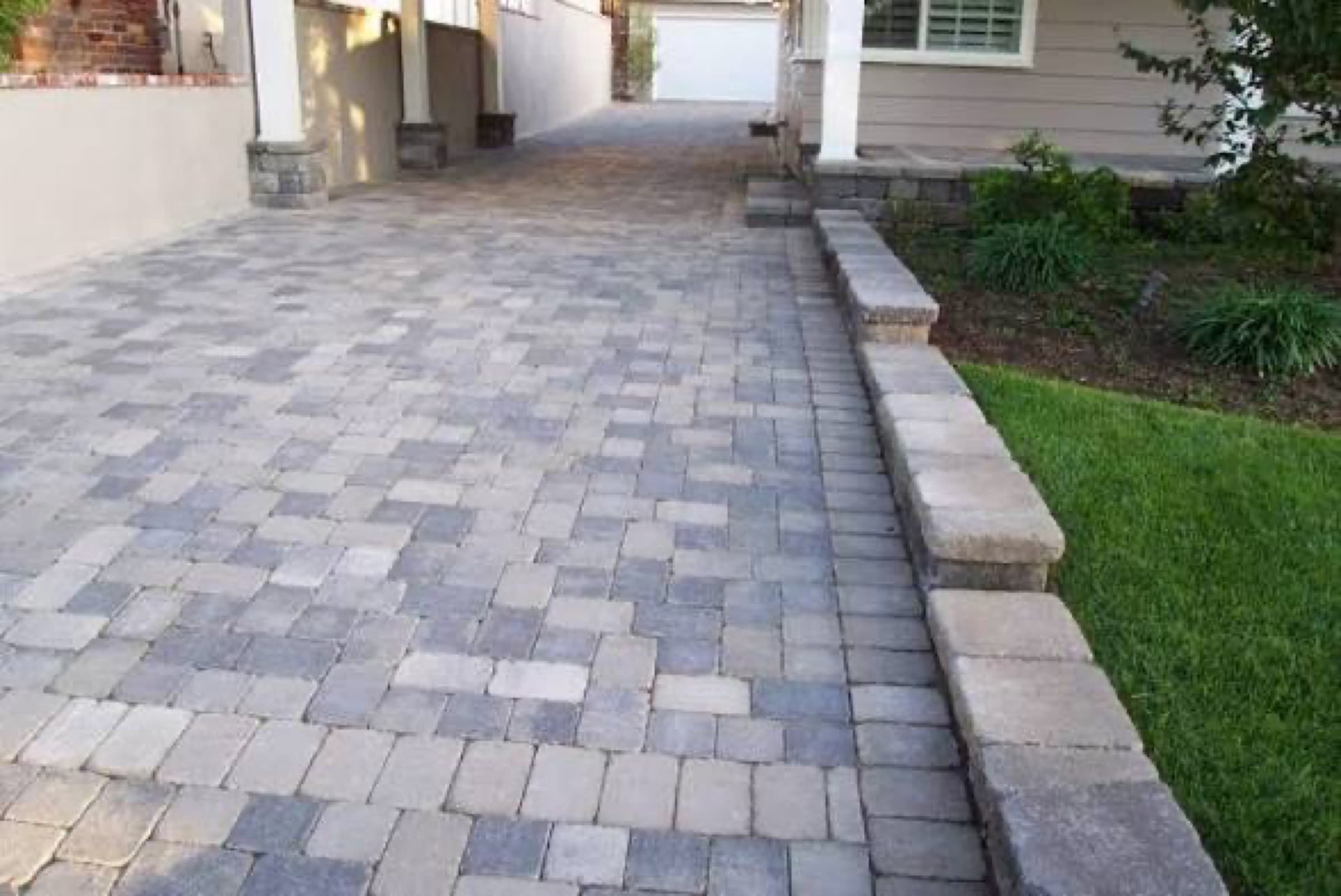
- Paver patios, paver walkways and garden paths
- Paver driveways and aprons built to the deeper base a vehicle load needs
- Excavation to depth, with the subgrade checked and compacted before any stone goes in
- Compacted aggregate base placed in four to six inch lifts rather than one deep fill
- Screeded bedding course, with the finished surface pitched to drain away from the house
- Edge restraint along every open edge, and joint sand swept in and compacted
- Cuts made to the line with a saw rather than filled out with mortar
- Paver patio repair: lifting and resetting sunken or heaved sections of existing paver work
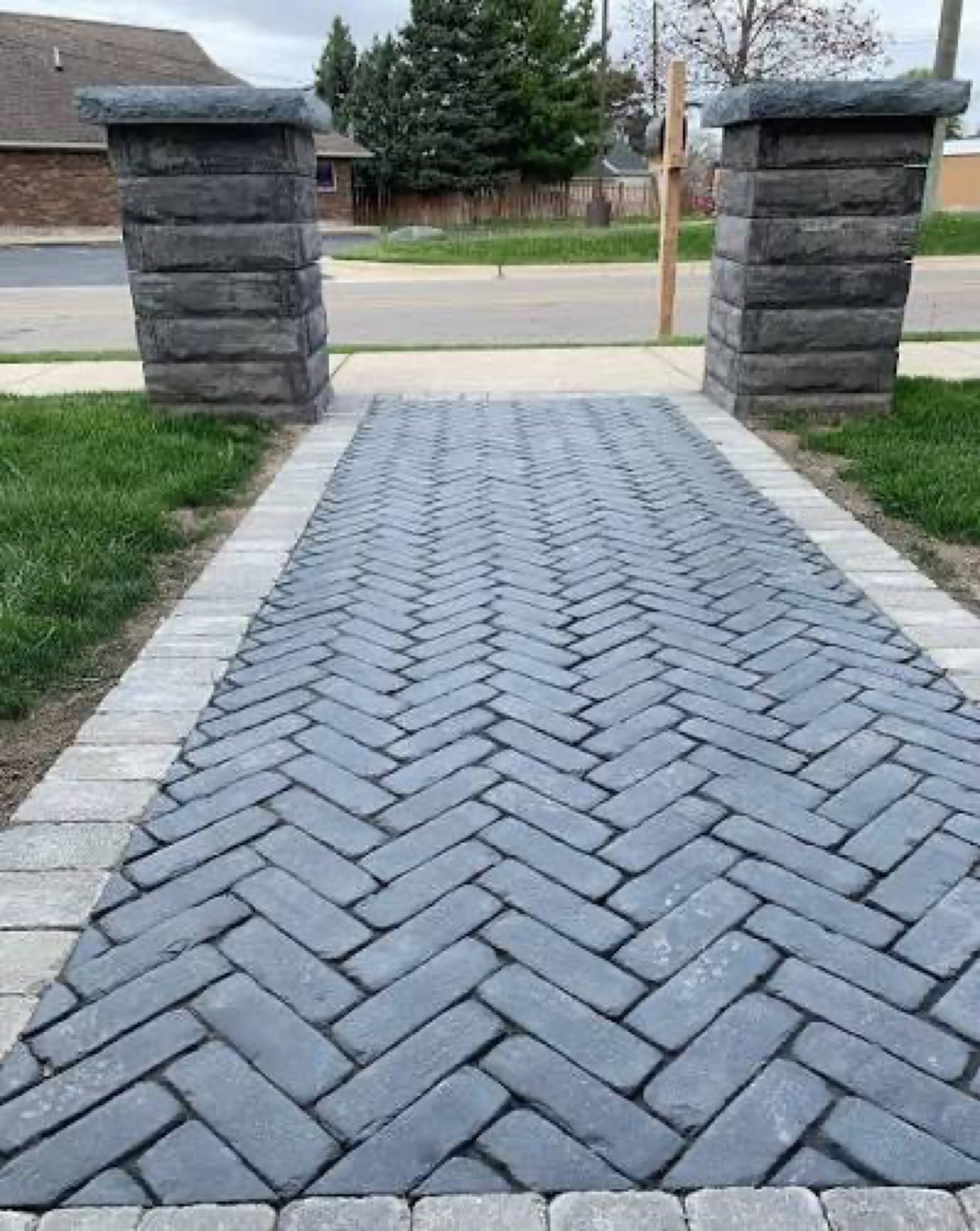
- Decorative stone, brick soldier courses and contrasting banding
Why it matters here
How a paver patio base is built for Illinois frost
Specification is at least four inches of compacted aggregate base under a patio or walkway on soil that drains, six inches or more under a paver driveway, and more again where a vehicle turns. It has to be compacted in four to six inch lifts, because a plate compactor cannot densify a foot of loose stone from the top down.
On the heavy clay under most of the northwest suburbs, the subgrade sheds water slowly, so that base is doing double duty as the drainage layer. An edge restraint is what stops the outer courses walking outward a little further every spring.
Last updated
Our work
Brick Paving we have done
How it works
Straightforward from the first call.
- 01
Get in touch
Call or send the form with what the property needs.
- 02
We walk the property
Seeing it in person is the only way to quote it honestly.
- 03
You get a quote
Scope and price in writing, so there are no surprises later.
- 04
We schedule the work
Booked in, done, and checked before we leave.
Before you ask
Brick Paving questions
Why do pavers sink or go uneven?
Almost always an under-built base: too shallow for the load, the wrong aggregate, or stone dumped in one deep fill and compacted from the top. Water finds the loose voids, freezes, and lifts or drops whole sections. Base work is invisible in the finished job and the easiest place to save money, so ask about it when comparing quotes. Resetting the surface without fixing the base reruns the same failure.
Can sunken pavers be repaired?
Usually, yes: sunken or heaved sections can be lifted, the base beneath corrected, and the same pavers reset. The repair only lasts if the cause is fixed, whether that is a soft spot in the base, a downspout washing out the bedding sand or a missing edge restraint. Because pavers come up one at a time, the reset area blends back in, unlike a patched crack in concrete.
Paver driveway or concrete: which is better?
Neither outright: pavers flex with frost and repair invisibly, while a concrete slab stays rigid until frost cracks it. A paver surface is a flexible pavement that moves in small increments, and individual units can be lifted and reset. Frost movement under a slab eventually shows as a crack, and a crack repair always shows. On clay, movement is a question of when, not whether.
Why does a patio need to slope, and how much?
About a quarter inch per foot, away from the house, so rain leaves the surface instead of standing in the joints and freezing. The patio has to agree with the wider grading too. Code asks for six inches of fall in the first ten feet away from a foundation wall, and a new patio built dead flat against the house can quietly undo that.
Can pavers be added to an existing patio?
Often, but matching older brick exactly is rarely possible. Manufacturers change blends, and years of sun and weather shift the colour of what is already down, so a near-match reads as a mistake from the first day. Extending with a deliberate border, a soldier course or a contrasting band looks better, because it reads as a design decision rather than a failed attempt at invisibility.
What does polymeric sand actually do?
It fills paver joints and then binds, resisting wash-out, discouraging ants and giving weeds far less room to germinate. It is not structural, and it will not stop a section moving over an inadequate base. It also needs a dry install and correct activation with water: too little and it stays loose, too much and it hazes across the paver faces.
Can paving be done in winter?
Not reliably, because frozen or saturated subgrade cannot be compacted to a density you can build on. Base stone laid over frozen ground settles at the spring thaw, which puts the problem right back under a finished surface. Spring through late autumn is the honest window here, and since those are the months everybody wants, booking ahead of the season is the practical move.
Where we work
Brick Paving across the North Shore & Northwest Suburbs
Across the North Shore, the northwest suburbs and the surrounding area.
- Evanston
- Wilmette
- Winnetka
- Glencoe
- Northbrook
- Glenview
- Highland Park
- Deerfield
- Lake Forest
- Arlington Heights
- Schaumburg
- Palatine
- Rolling Meadows
- Mount Prospect
- Prospect Heights
- Buffalo Grove
- Elk Grove Village
- Des Plaines
- Hoffman Estates
- Inverness
- Barrington
- Libertyville
- Vernon Hills
- Mundelein
- Lake Zurich
- Grayslake
- Crystal Lake
Landscaping & hardscape
Goes with this
Need brick paving?
Free estimates across Arlington Heights, Evanston and across the North Shore and northwest suburbs and the surrounding suburbs. Tell us what you are looking at and we will come and see it.