Lawn Maintenance in the North Shore & Northwest Suburbs
A good lawn here is a routine, not a rescue. Mow weekly at the right height, feed when the grass can actually use it, and pull cores out of the ground once a year. Done consistently, that is most of the job.
The work included
- Weekly mowing at two to three inches, with clippings returned unless they are heavy enough to mat
- Edging along walks, drives and bed lines, and trimming where a mower deck cannot reach
- Fertilizer applications timed to the season rather than spread evenly across it
- Core aeration, plugs pulled and left to break down, which relieves compaction in a way spiking does not
- Overseeding into the aeration holes in the late-summer window, and sod where bare ground will not hold seed
- Spring cleanup: matted leaf litter cleared, beds cut back, snow-mold damage raked open so air reaches the crowns
- Fall cleanup and leaf removal, with the final cut taken shorter so the canopy does not mat under snow
- Mulch installation at two to three inches, pulled back off trunks and root flares
- Topsoil delivery and grading for the low spots that hold water after every storm
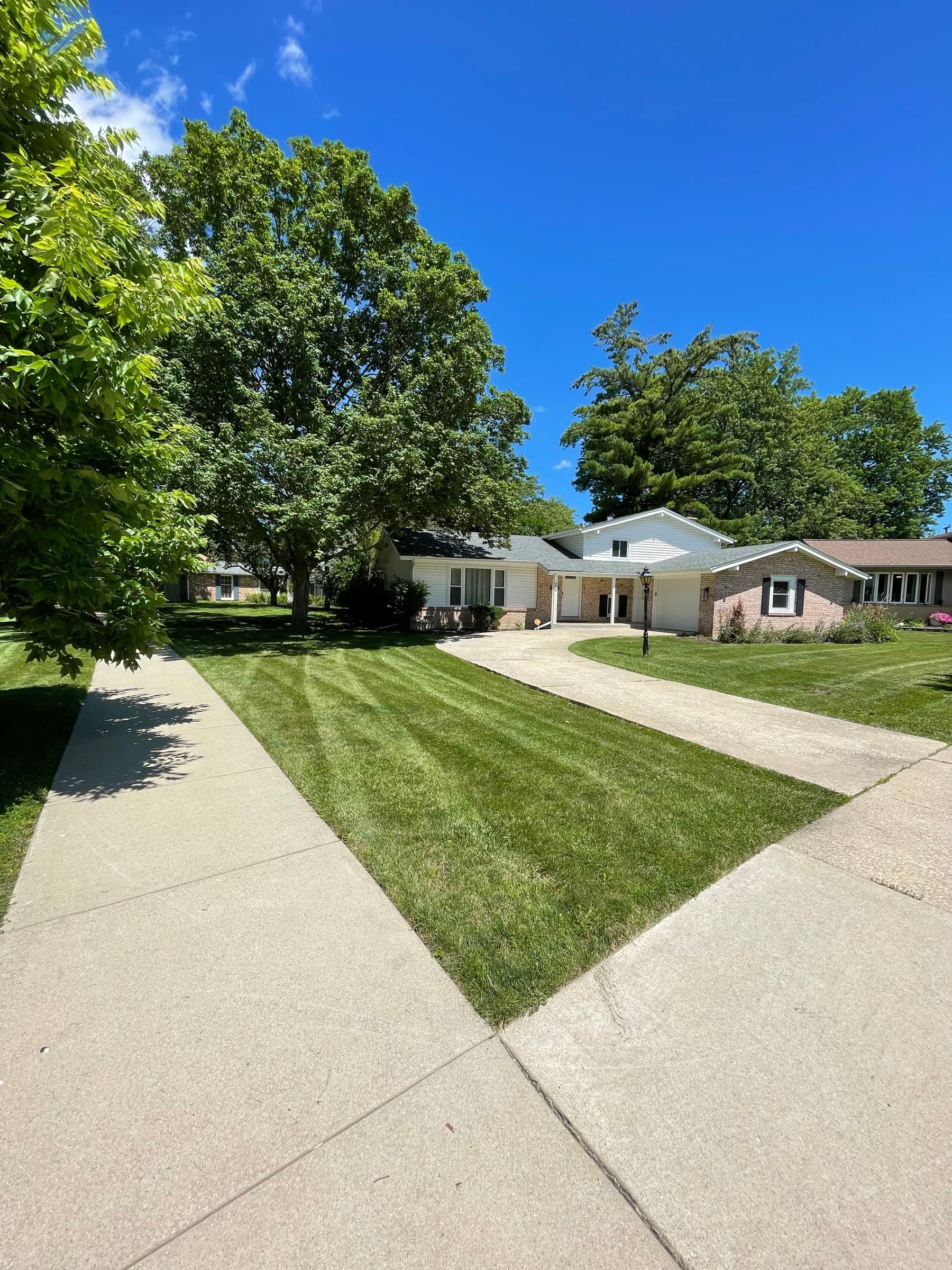
Almost every yard in the northwest suburbs sits on glacial till: a heavy silty clay loam that holds nutrients well, drains slowly, and in most subdivisions was compacted by heavy equipment before the sod went down.
That soil is why the same few things do nearly all the work. Illinois Extension puts Kentucky bluegrass at two to three inches, and taking more than a third of the blade in one pass stresses it. That is the real argument for a weekly visit over an occasional heavy cut.
Aeration matters for the same reason. On compacted clay, water and fertilizer run off the surface instead of reaching the roots.
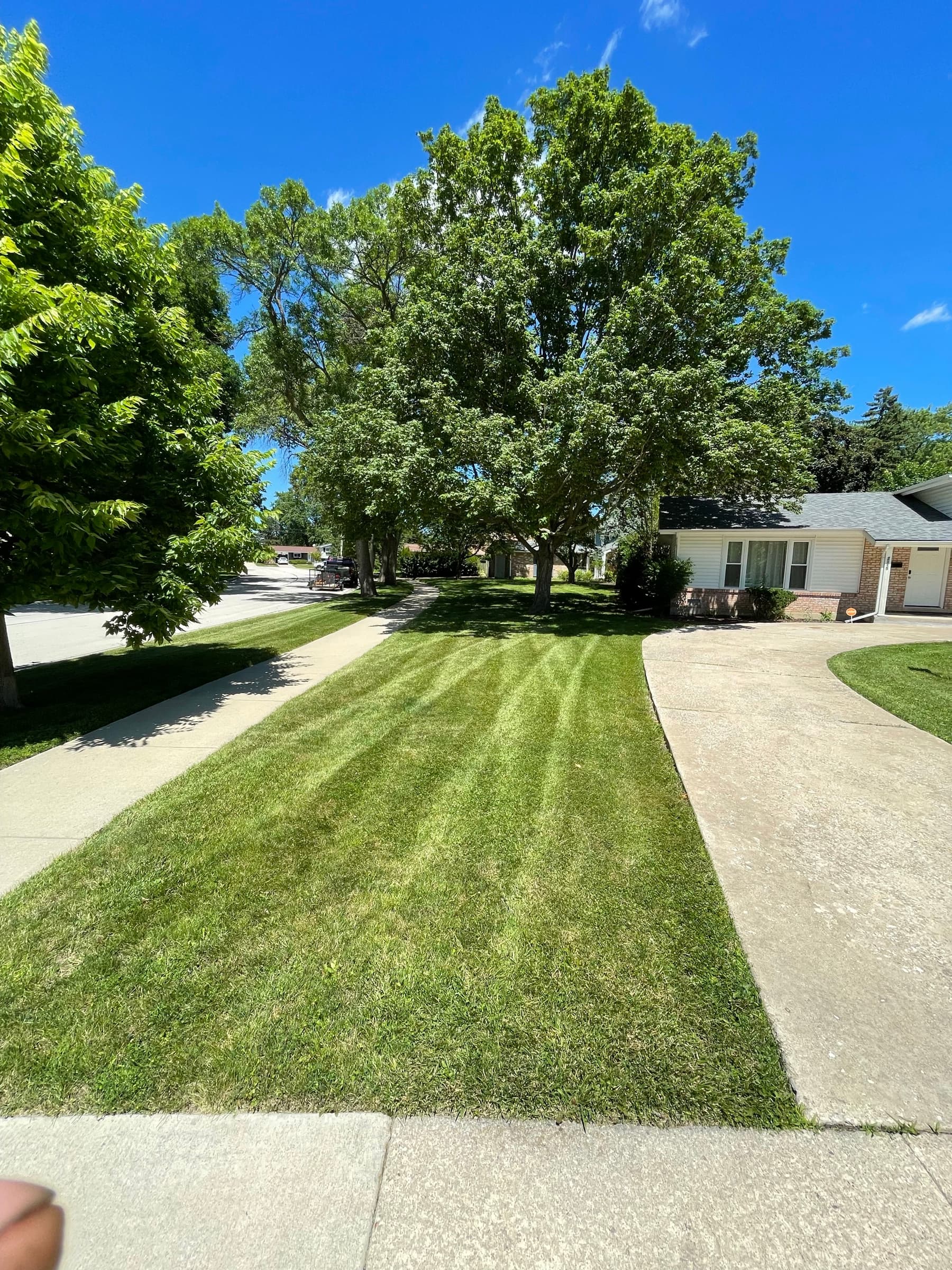
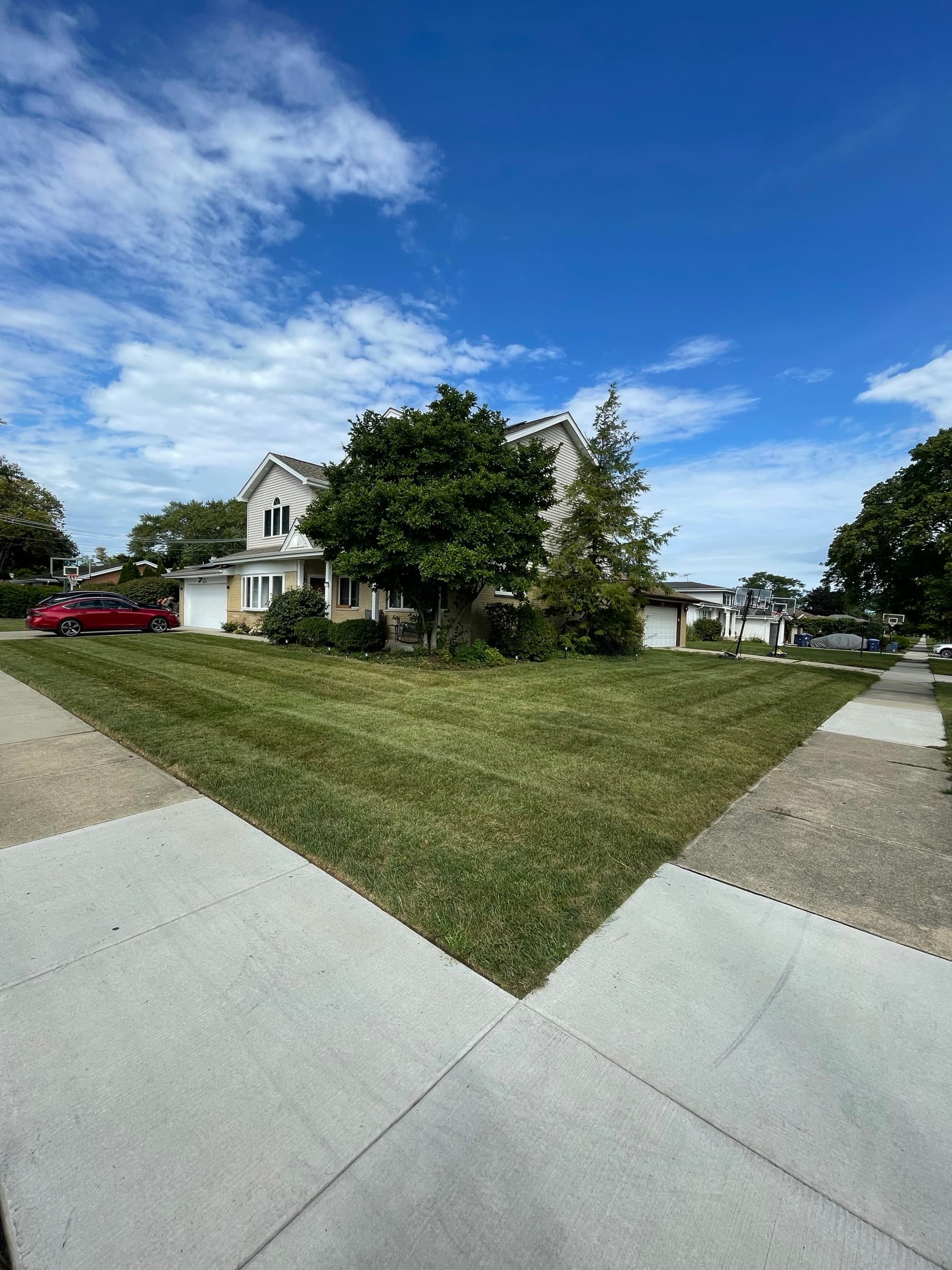
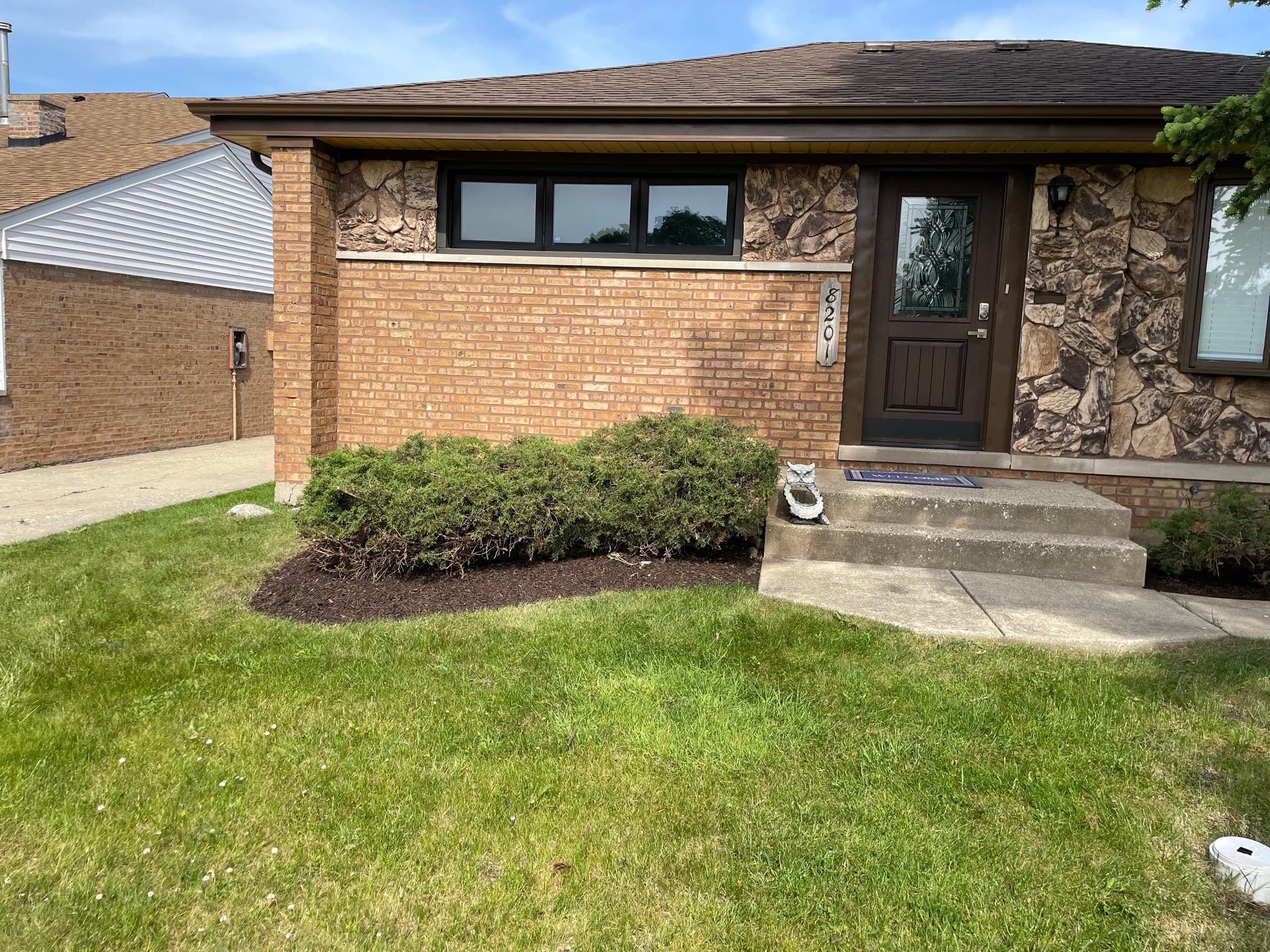
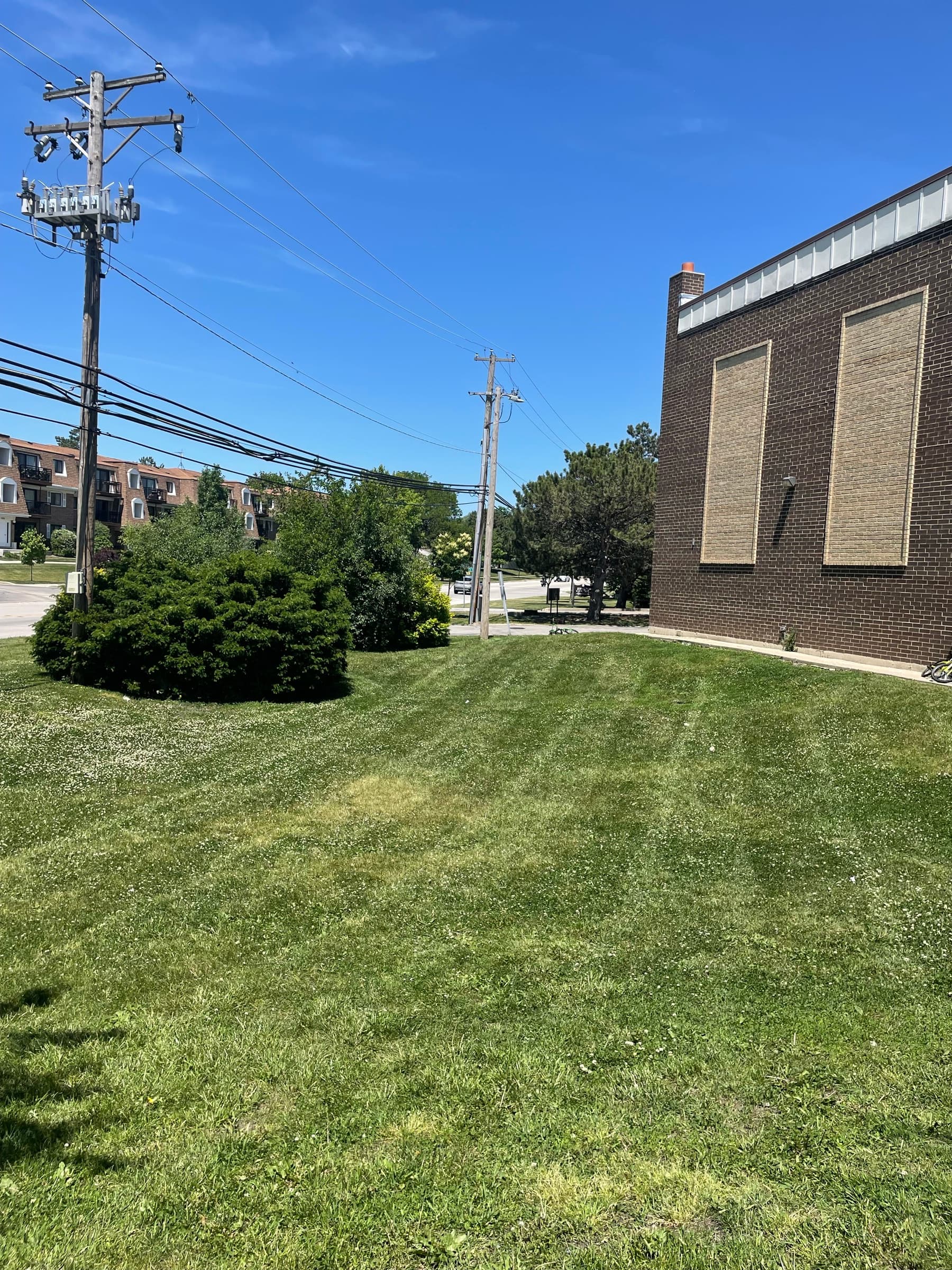
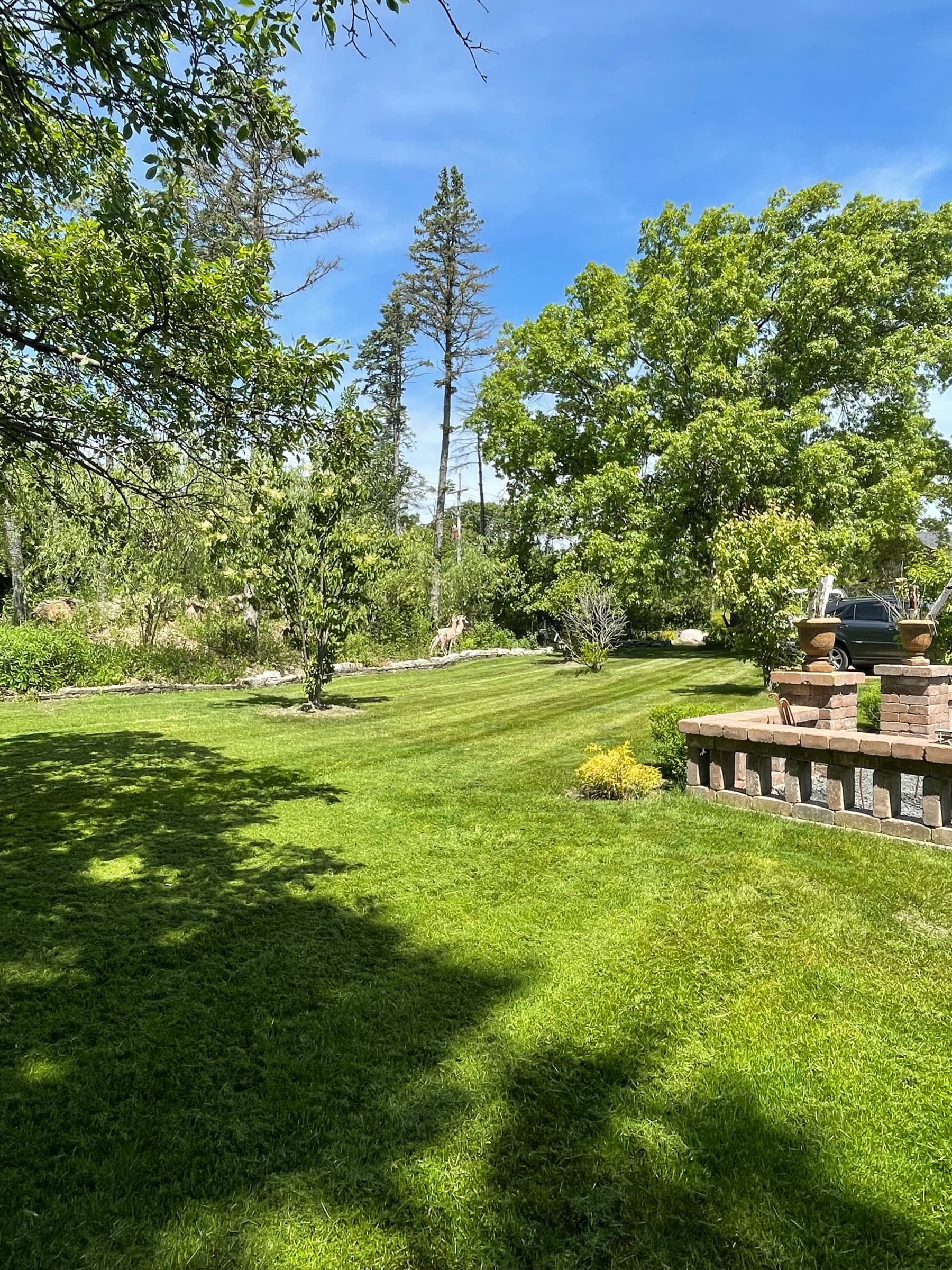
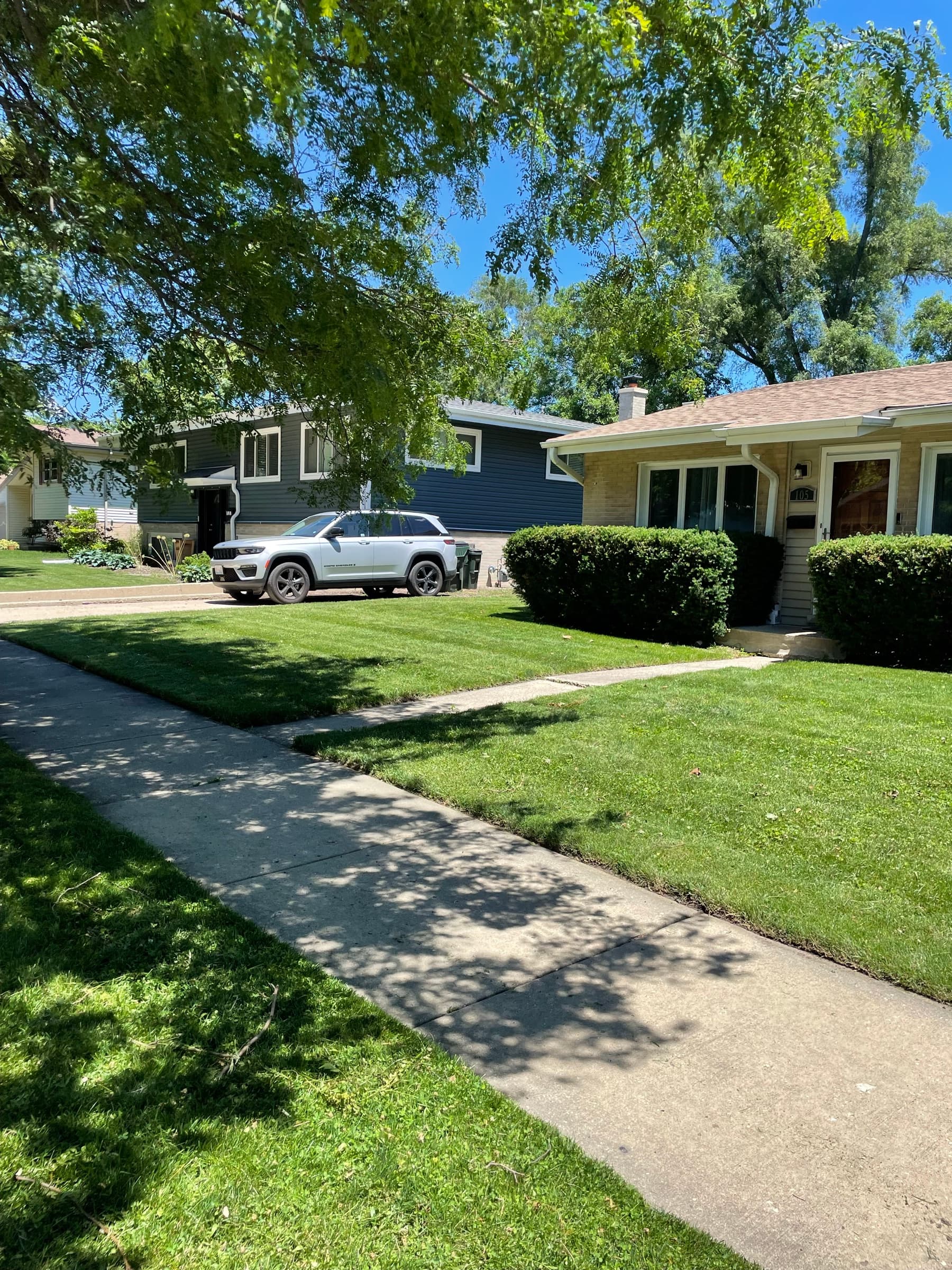
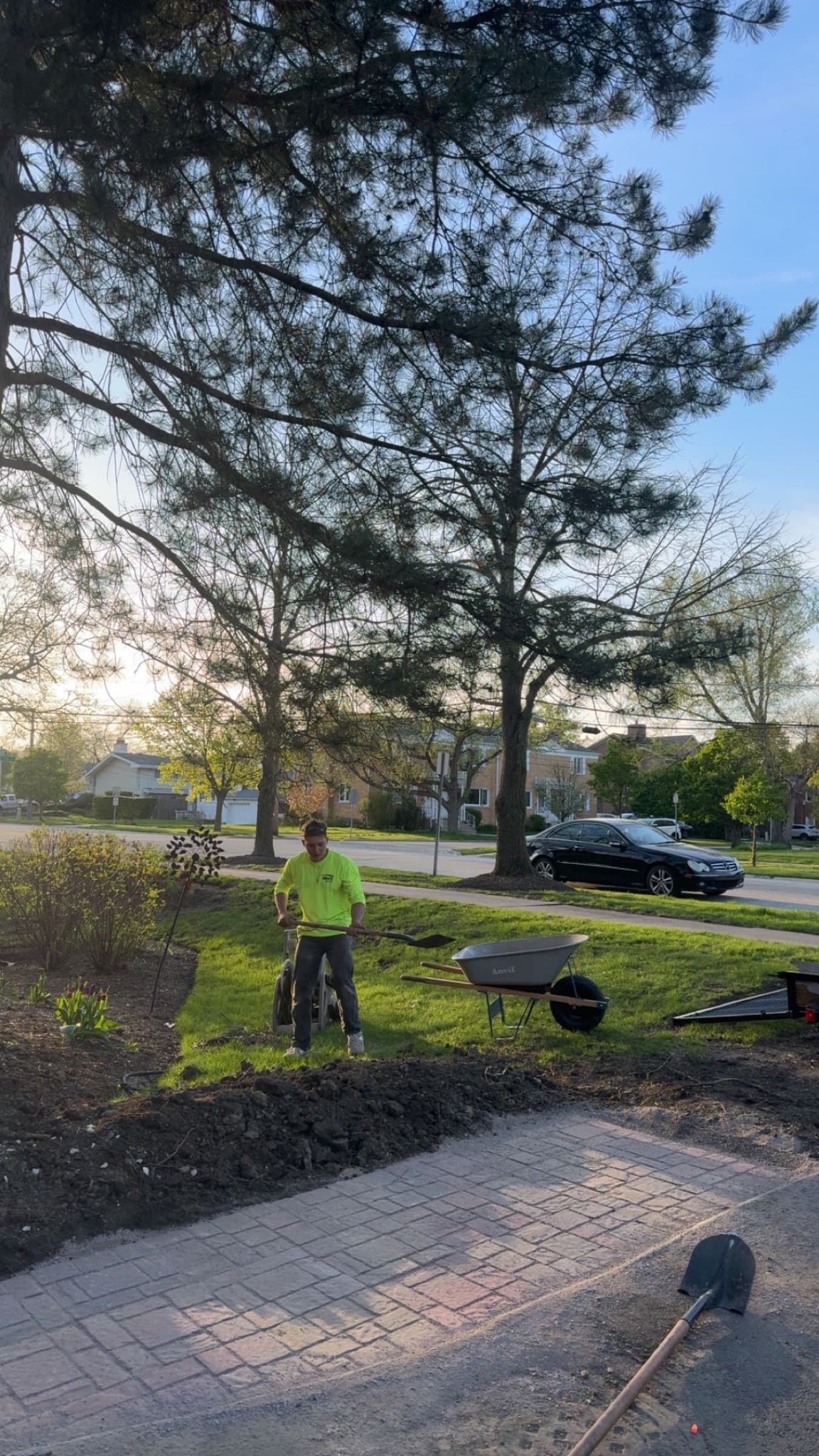
Lawn Maintenance we have done
Straightforward from the first call
- 01
Get in touch
Call or send the form with what the property needs.
- 02
We walk the property
Seeing it in person is the only way to quote it honestly.
- 03
You get a quote
Scope and price in writing, so there are no surprises later.
- 04
We schedule the work
Booked in, done, and checked before we leave.
Lawn Maintenance questions
How often should a lawn be mowed?
Weekly through the main growing season, and that is not an upsell, it is the one-third rule. Removing more than about a third of the blade height at once strips the plant of the leaf area it feeds on and pushes it into a stress response, which is exactly when weeds get their opening. Cool-season grass also surges in late May and June, so the week you skip is usually the week it grows fastest. A consistent weekly cut at two to three inches beats a fortnightly scalping every time.
When is the best time to aerate and overseed?
Mid-August to mid-September, and it works into early October. That window is ideal for a specific reason: the soil is still warm from summer so seed germinates fast, the air is cooling so new seedlings are not fighting heat, rainfall is more reliable, and crabgrass has stopped competing for space. Spring is the fallback rather than the equal. Aeration and seeding also pair naturally. The holes give seed soil contact and a protected pocket, which is far better than broadcasting onto a compacted surface.
How much water does a lawn actually need?
About one to one and a half inches a week, rainfall included, delivered deep and infrequently, early in the morning. Shallow daily watering trains roots to stay near the surface and keeps the canopy wet long enough to invite disease. The local wrinkle is the clay: it only accepts water so fast, so a single long run tends to puddle and run off while the root zone stays dry. Two or three shorter cycles with a gap between them put the same water where it is wanted.
Why does the lawn go brown and flat in July?
Usually dormancy rather than death. Kentucky bluegrass is built to shut down in heat and drought and green back up when conditions return, which is a survival feature, not a failure. The useful responses are to raise the mowing height, ease off nitrogen, and keep traffic off it. What dormancy is not is grub damage. That shows up in mid to late August, stays brown through rain, and lifts off the soil like carpet because the roots have been eaten. Those two get confused constantly and need opposite responses.
Do you handle spring and fall cleanups separately from mowing?
Yes. Cleanups can be booked on their own or folded into a maintenance schedule. Spring covers clearing the matted layer that sat under snow, cutting back last year's growth, raking open any snow-mold patches, and getting beds ready before growth starts. Fall covers leaf removal, cutting perennials back, clearing beds, and a final mow taken shorter than the summer height. Either one is worth doing properly, because both decide how the lawn looks for the following three months.
Do all the leaves really have to come off?
A thin scattering can be mulched into the lawn with a mower and will break down over winter, which is genuinely good for the soil. A thick wet layer is a different thing: it blocks light, holds moisture against the crowns all winter, and is the single most reliable way to produce snow mold and vole runs by March. In the older parts of Arlington Heights and Mount Prospect, with mature oaks and maples, the volume is usually well past what a mower can chop and the leaves have to be removed.
Lawn Maintenance across the North Shore & Northwest Suburbs
Across the North Shore, the northwest suburbs and the surrounding area.
- Evanston
- Wilmette
- Winnetka
- Glencoe
- Northbrook
- Glenview
- Highland Park
- Deerfield
- Lake Forest
- Arlington Heights
- Schaumburg
- Palatine
- Rolling Meadows
- Mount Prospect
- Prospect Heights
- Buffalo Grove
- Elk Grove Village
- Des Plaines
- Hoffman Estates
- Inverness
- Barrington
- Libertyville
- Vernon Hills
- Mundelein
- Lake Zurich
- Grayslake
- Crystal Lake
Need lawn maintenance?
Free estimates across Arlington Heights, Evanston and across the North Shore and northwest suburbs and the surrounding suburbs. Tell us what you are looking at and we will come and see it.